Reading Time 7
Number of Words 1355
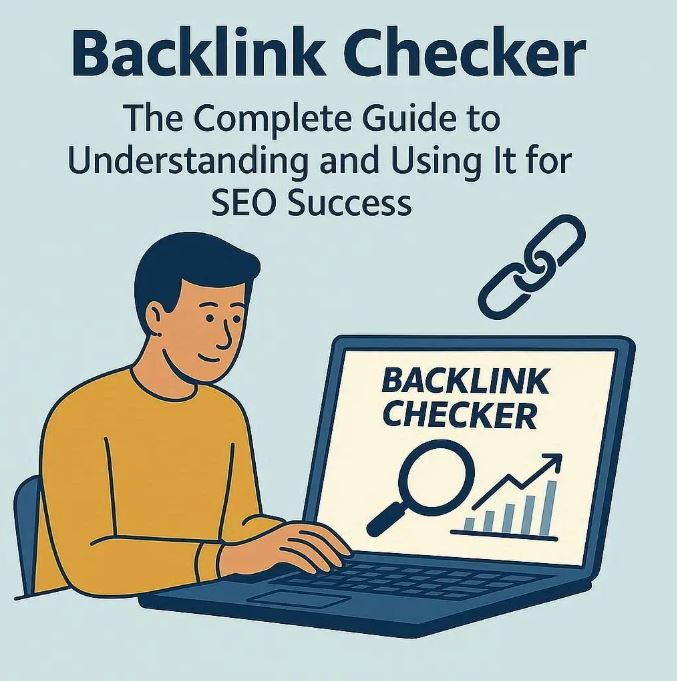
Backlink Checker Meaning: The Complete Guide to Understanding and Using It for SEO Success
Most website owners struggle to understand why their rankings drop or why competitors outrank them, even when their content seems better. The hidden reason often lies in one crucial SEO factor: backlinks.
Backlinks act as digital votes of trust. When other websites link to yours, Google sees it as a sign of credibility. But here’s the problem — not all backlinks are good, and some can even harm your SEO performance. Without tracking them, you’re flying blind.
The solution? Use a Backlink Checker — a powerful SEO tool that reveals who links to your site, how strong those links are, and what impact they have on your rankings.
In this article, we’ll explain the meaning of Backlink Checker, how it works, and how you can use it to strengthen your website’s authority, outperform competitors, and protect your SEO from harmful links.
What Does “Backlink Checker” Mean?
A Backlink Checker is an SEO tool that analyzes the links pointing to a website (also known as inbound links or referring domains). These backlinks act as digital votes of confidence from one site to another — the more quality backlinks your website has, the more trustworthy it appears to search engines like Google.
Simply put, a Backlink Checker shows you:
-
Who is linking to your website
-
The quality of those links
-
The anchor text used
-
The domain authority of the referring sites
-
The number of backlinks gained or lost over time
By understanding these metrics, you can create smarter link-building strategies and protect your site from harmful or spammy backlinks.
Why Are Backlinks So Important for SEO?
Backlinks are one of Google’s top three ranking factors. They signal that your content is valuable, credible, and worth referencing.
Here’s why backlinks matter:
-
Authority building: The more high-quality links you earn, the more authority your website gains in Google’s eyes.
-
Improved rankings: Backlinks help your pages rank higher for target keywords.
-
Referral traffic: A backlink from a popular website can drive real users directly to your site.
-
Faster indexing: Search engines use backlinks to discover and crawl your pages faster.
Without backlinks, even the best content may remain invisible. That’s why using a Backlink Checker tool is essential — it gives you the insights you need to build and maintain a strong backlink profile.
How a Backlink Checker Works
Most backlink checkers use a massive index of web pages to crawl and store links between domains. When you enter a URL, the tool retrieves:
-
The total number of backlinks
-
The referring domains
-
The anchor texts used
-
The dofollow/nofollow ratio
-
The authority score of linking sites
Common Metrics You’ll Find in a Backlink Checker
| Metric | Meaning | Why It Matters |
|---|---|---|
| Total Backlinks | The total count of links pointing to your site | Shows link popularity |
| Referring Domains | Unique domains linking to your site | High variety = strong authority |
| Domain Authority / Rating | A score predicting how well a site ranks | Helps gauge link quality |
| Anchor Text | The clickable text in a hyperlink | Reveals keyword strategy |
| Dofollow/Nofollow Ratio | Whether the link passes ranking power | Ideal ratio shows natural growth |
| Spam Score | Risk level of harmful backlinks | Helps with link disavow decisions |
By understanding these metrics, you can decide which backlinks help your SEO — and which might hurt it.
Top Backlink Checker Tools in 2025
Here are some of the best backlink analysis tools professionals use today:
-
Lookkle Backlink Checker – A fast and intuitive SEO tool that provides a full backlink analysis, including traffic sources, link authority, and competitor comparison.
-
Ahrefs Backlink Checker – Known for its huge backlink database and accurate metrics.
-
Semrush Backlink Analytics – Excellent for tracking backlink growth and comparing multiple domains.
-
Moz Link Explorer – Offers useful metrics like Domain Authority and Spam Score.
-
Majestic SEO – Provides unique metrics like Trust Flow and Citation Flow.
Each tool offers different strengths. For example, Lookkle Site Explorer is great for website owners who want an easy-to-use, affordable solution with visual backlink tracking.
How to Use a Backlink Checker Step by Step
Step 1: Enter Your Website URL
Start by typing your website domain into the Backlink Checker.
Step 2: Analyze the Overview
The tool will show your total backlinks, referring domains, and link growth trend.
Step 3: Check Link Quality
Identify which backlinks come from high-authority domains. These are the links you want to keep or replicate.
Step 4: Identify Toxic Links
Low-quality or spammy backlinks can harm your rankings. Use the checker to find and disavow them through Google Search Console.
Step 5: Monitor Competitors
Enter your competitors’ URLs to see where their backlinks come from. This helps you find new link-building opportunities.
Step 6: Track Progress
Monitor your backlink profile regularly to ensure healthy link growth and detect new opportunities early.
How to Identify Quality Backlinks
Not all backlinks are created equal. A single link from a trusted website can be more powerful than 100 from low-quality sources.
A high-quality backlink typically has:
-
High domain rank (DR)
-
Relevance to your topic or industry
-
Natural anchor text
-
Comes from unique referring domains
-
Sits within editorial content (not footer or sidebar links)
Example Comparison
| Backlink Source | Domain Rank (DR) | Relevance | Quality Score |
|---|---|---|---|
| Forbes.com | 90+ | High | Excellent |
| NewsletterAlways.com | 55 | Medium-High | Strong |
| Unknown Blog | 20 | Low | Weak |
The takeaway: Focus on quality, not quantity.
Practical Strategies to Build High-Quality Backlinks
Here are actionable tactics to grow your backlink profile ethically and effectively:
1. Publish Original Research
Data-backed reports or studies attract organic backlinks from journalists and bloggers.
2. Guest Posting
Write articles for authoritative blogs in your niche and include a link back to your site.
3. Broken Link Building
Find broken links on other websites and suggest your content as a replacement.
4. Create Shareable Content
Infographics, comparison tables, and detailed guides (like this one!) attract natural backlinks.
5. Leverage Business Directories
Submit your website to trusted directories and niche platforms.
6. Monitor Mentions
Use tools to find unlinked mentions of your brand and ask webmasters to add your backlink.
7. Competitor Backlink Replication
Analyze your competitors’ backlinks using tools like Lookkle Backlink Checker and try to earn links from the same sources.
Avoid These Backlink Mistakes
Even experienced marketers sometimes make backlinking errors that can lead to penalties.
-
❌ Buying low-quality backlinks
-
❌ Over-optimizing anchor texts
-
❌ Building links too fast
-
❌ Ignoring nofollow/dofollow ratios
-
❌ Failing to disavow toxic backlinks
A Backlink Checker helps you avoid all these mistakes by showing you exactly what’s working and what’s risky.
Benefits of Using a Backlink Checker Regularly
-
Better SEO decisions: Data-driven insight for link-building strategies.
-
Competitor advantage: Know where your rivals get their authority from.
-
Risk prevention: Identify harmful links before they affect rankings.
-
Performance tracking: Measure link growth over time.
-
Enhanced authority: Focus efforts on the links that truly matter.
Backlink Checker vs. Backlink Monitor
Although similar, they serve slightly different purposes:
| Feature | Backlink Checker | Backlink Monitor |
|---|---|---|
| Primary Use | Discover backlinks | Track existing backlinks |
| Data Type | One-time snapshot | Ongoing updates |
| Best For | Competitor analysis | Link maintenance |
| Example Tool | Lookkle Backlink Check | Ahrefs Alerts |
Using both tools together ensures you don’t miss any new or lost backlinks.
Real-World Example: How Backlink Analysis Boosts Rankings
Imagine you run a tech review site like MiniPC-Review.com.
By using a Backlink Checker, you notice that competitors are earning backlinks from guest posts on hardware blogs.
You replicate the strategy, publish 5 high-quality guest articles, and earn backlinks from domains with DR 70+.
Within three months, your top keyword “best mini PC 2025” moves from position #18 to #5 — purely through improved backlink authority.
This is the power of data-driven link building.
Expert Tips for Backlink Analysis
-
Use filters wisely: Focus on “dofollow” and “high DR” links.
-
Segment by country or category: Target backlinks relevant to your niche market.
-
Track new vs. lost links: A sudden drop may indicate negative SEO or link removal.
-
Combine with traffic data: Tools like Lookkle also show how backlinks impact referral visits.
-
Export data regularly: Keep historical records to measure long-term growth.
FAQs About Backlink Checkers
1. What is the main purpose of a Backlink Checker?
To identify all the websites linking to yours and evaluate their quality for SEO improvement.
2. Are free backlink checkers accurate?
Free tools provide limited data. For deeper insights, premium tools like Lookkle or Ahrefs are more reliable.
3. How often should I check my backlinks?
At least once a month, or weekly if you’re actively link-building.
4. Can bad backlinks hurt SEO?
Yes. Toxic backlinks from spammy sites can lead to ranking drops or manual penalties.
5. How do I remove harmful backlinks?
Disavow them in Google Search Console after confirming they’re low-quality using a backlink analysis tool.
Conclusion: Take Control of Your Backlink Profile
Understanding the meaning of Backlink Checker is the first step toward mastering SEO success.
It’s not just about counting links — it’s about analyzing their quality, relevance, and impact.
With tools like Lookkle Backlink Checker, you can easily monitor backlinks, track competitors, and build a link profile that drives real traffic and authority.
👉 Start exploring your backlinks today — and turn your data into SEO growth.