Reading Time 16
Number of Words 3421
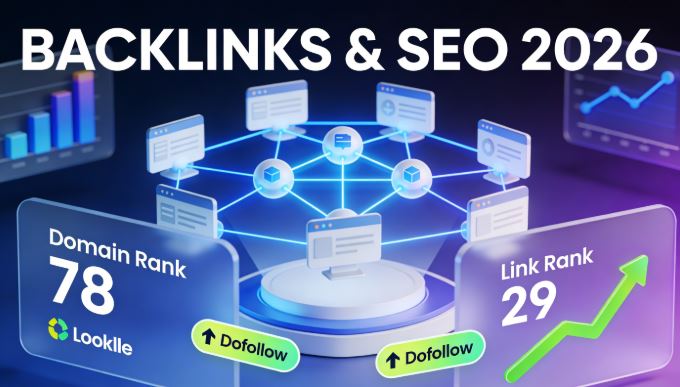
Backlinks remain one of the most critical ranking factors in search engine optimization, though their role has evolved significantly with AI-driven search and Google's increasingly sophisticated algorithms.
Understanding how backlinks work and their impact on SEO in 2026 is essential for any website owner looking to improve their search visibility and tools make tracking and analyzing these crucial links easier than ever.
What Are Backlinks?
A backlink (also called an "inbound link" or "external link") is a hyperlink from one website to another website. When Site A links to Site B, Site B receives a backlink from Site A. These links act as "votes of confidence" that signal to search engines that other websites find your content valuable enough to reference.
In HTML code, a basic backlink looks like this:
<a href="https://example.com/page">Anchor Text</a>
Search engines like Google use these links to:
-
Discover new content by crawling from one page to another
-
Evaluate content quality based on who links to it
-
Determine authority by analyzing the quantity and quality of backlinks
-
Assess relevance through the context surrounding links
Pro Tip: Use Lookkle's analytics platform to monitor which pages on your site are earning the most backlinks and identify opportunities to improve your link-building strategy.
Why Backlinks Still Matter in 2026
Despite ongoing speculation about their declining importance, backlinks remain a top-3 Google ranking factor in 2026. However, their weight in the algorithm has shifted:
Current Algorithm Weight (Q1 2025-2026)
According to First Page Sage's comprehensive ranking factor analysis:
-
Backlinks: 13% of Google's algorithm (down from 15% in 2024 and 50%+ in earlier years)
-
They rank as the 3rd most important factor after content quality and user engagement
-
Quality now matters exponentially more than quantity
Why They Still Work
1. Authority Signal
Backlinks help search engines determine which websites are trustworthy and authoritative in their niche. Google confirmed that links remain "among their most important ranking signals".
2. Discovery Mechanism
Search engines discover new content by following links from already-indexed pages. Without backlinks, even great content may remain invisible. Lookkle's web analytics can help you identify which referral sources are driving the most valuable traffic to your site.
3. Relevance Indicator
The context surrounding a backlink (anchor text, surrounding content, linking site's topic) helps search engines understand what your page is about.
4. Traffic Driver
Beyond SEO, backlinks drive direct referral traffic. Studies show organic traffic from backlinks converts 1.7x better than paid traffic..
Supporting Data
Research from multiple sources confirms backlinks' continued importance:
Backlinko Study (11.8M Results):
"A site's overall link authority strongly correlates with higher search engine rankings"
Semrush Ranking Factors Study:
"The more backlinks a domain has, the higher its position on the SERP"
Ahrefs 2025 Research:
Sites with strong backlink profiles rank 25% higher in competitive niches
Types of Backlinks: Understanding the Differences
Not all backlinks are created equal. Here are the main types you need to know:
1. Dofollow vs Nofollow Links
Dofollow Backlinks
-
Default link type without special attributes
-
Pass "link juice" (ranking power) to the linked page
-
Signal endorsement to search engines
-
Most valuable for SEO
HTML code:
<a href="https://www.lookkle.com">Visit Lookkle</a>
Nofollow Backlinks
-
Include
rel="nofollow"attribute -
Traditionally didn't pass ranking power
-
Since Google's 2019 update, treated as "hints" rather than directives
-
Can still drive traffic and brand visibility
HTML code:
<a href="https://www.lookkle.com" rel="nofollow">Visit Lookkle</a>
Important Update: Google now may consider nofollow links for ranking based on relevance and context, making them more valuable than previously thought.
2. Editorial Backlinks
These are links naturally embedded within content by editors or writers because they genuinely find your content valuable. They're considered the highest quality backlinks because they're earned, not requested.
Example: When a tech blogger naturally links to Lookkle's blog as a resource for web analytics insights, that's an editorial backlink.
3. Guest Post Backlinks
Links earned by writing valuable content for other websites in your niche. Quality depends heavily on:
-
Contextual alignment with the publisher's audience
-
Natural integration (not forced promotion)
-
Value provided to readers
4. Sponsored/Paid Backlinks
Links that are paid for must include rel="sponsored" attribute per Google guidelines. Without proper tagging, they can trigger penalties.
5. User-Generated Content (UGC) Links
Links from blog comments, forums, or social media typically include rel="ugc" attribute. While often nofollow, they can still drive traffic and brand awareness.
6. Image Backlinks
When another site embeds your image and links back to your site as the source. These can be powerful for visual content creators.
How to Measure Backlink Quality
Not all backlinks improve your rankings. Here are key metrics to evaluate quality:
Link Rank (LR) - Lookkle
What it measures: The authority and SEO value of a specific backlink
Scale: 0-100 (higher is better)
Factors considered:
-
Quality of the linking page itself
-
Position of the link on the page (editorial content vs. footer)
-
Relevance between linking page and target page
-
Number of outbound links on the linking page
How to use it:
Link Rank appears in Lookkle's Backlink Checker table for each individual backlink. This lets you quickly identify which specific backlinks pass the most SEO value to your site.
Interpretation:
-
LR 0-20: Low-value links (directories, blog comments, low-authority pages)
-
LR 20-40: Moderate value (established blogs, niche sites)
-
LR 40-60: Strong links (authoritative industry sites)
-
LR 60-80: Premium backlinks (major publications, industry leaders)
-
LR 80-100: Elite links (top-tier media, government, educational institutions)
Example from Lookkle data:
From URL: https://example.com/blog/post1 Link Rank: 9 Domain Rank: 90
This shows a low Link Rank (9) despite the domain having excellent authority (DR 90), likely because the link is in a less prominent position (sidebar/footer) or the specific page has low authority (see the generated image above).
Domain Rank (DR) - Lookkle
What it measures: The overall authority of the entire referring domain
Scale: 0-100 (similar to Moz's Domain Authority and Ahrefs' Domain Rating)
Factors considered:
-
Total number of quality backlinks to the domain
-
Authority of domains linking to it
-
Historical trust and stability
-
Content quality and user engagement signals
How to use it:
Domain Rank is displayed prominently in Lookkle's Backlink Checker both in:
-
The detailed backlinks table (per backlink)
-
The "Unique Domains" section showing all referring domains with their DR scores
Pro Tip: Sort backlinks by Domain Rank using the arrow button in Lookkle's interface to prioritize outreach to high-authority domains linking to your competitors but not to you (see the generated image above).
Interpretation:
-
DR 0-20: New, unestablished sites or low-quality domains
-
DR 20-40: Growing sites with some authority
-
DR 40-60: Established websites in their niche
-
DR 60-80: Strong authority sites (major blogs, established brands)
-
DR 80-100: Premium domains (major media outlets, Wikipedia, government sites)
Example from Lookkle data:
Referring Domain: minipc-review.com Backlinks: Multiple Dofollow: Yes Domain Rank: 78
This indicates a strong authority domain sending valuable backlinks (see the generated image above).
Domain Authority (DA) - Moz
What it measures: Site's ranking power on a 1-100 scale
Factors considered:
-
Number of unique linking domains
-
Total backlinks
-
Authority and relevance of linking sites
Interpretation:
-
DA 1-20: New or low-authority sites
-
DA 20-40: Developing authority
-
DA 40-60: Established sites
-
DA 60-80: Strong authority
-
DA 80-100: Industry leaders
Domain Rating (DR) - Ahrefs
What it measures: Strength of backlink profile
Factors considered:
-
Number of unique referring domains
-
DR of those referring domains
-
Number of outgoing links from referrers
Key insight: Fewer outgoing links from a referrer = more "link juice" passed to you.
Authority Score (AS) - Semrush
What it measures: Holistic website authority
Factors considered:
-
Link quality and quantity
-
Estimated organic traffic
-
Spam indicators in link profile
Unique advantage: Combines backlink data with traffic estimates for fuller picture.
Trust Flow - Majestic
What it measures: How close your backlinks are to trusted, authoritative sites
Relevance Metrics
Topic Match Score: Evaluates whether linking sites' content aligns with your niche. A tech blog with DA 45 in your industry often outperforms a general news site with DA 70.
Lookkle Advantage: While Lookkle focuses on comprehensive web analytics and traffic insights, integrating backlink data from these tools with Lookkle's traffic analysis gives you a complete picture of how backlinks impact your actual visitor behavior and conversions.
Proven Backlink Building Strategies for 2026
1. Create Linkable Assets
Content so valuable others naturally want to reference it:
Original Research & Data
Conduct surveys, analyze industry data, compile statistics. Example: "State of Web Analytics 2026: User Survey Results" attracts links from marketing blogs and SEO sites.
Comprehensive Guides
In-depth resources that become go-to references in your niche—like this guide you're reading on Lookkle's blog.
Visual Content
Infographics, original images, data visualizations that others want to embed.
2. Strategic Guest Posting
Best Practices for 2026:
Find contextually aligned publishers
Look for sites that already rank for your topics and have real audience overlap—not just high DA.
Pitch valuable, on-topic articles
Focus on solving audience problems. Great formats:
-
"Top 5 Analytics Tools For Small Businesses"
-
"How We Improved Traffic Tracking Using Better Analytics"
-
"Alternatives to [Expensive Analytics Tools] That Actually Work"
Write for usefulness
Include original insights, comparison tables, or data others can cite. Make it skimmable with clear structure.
3. Digital PR & Media Coverage
Create newsworthy content:
-
Original research (share unique data from Lookkle analytics)
-
Industry trend analysis
-
Timely commentary on current events
Use HARO (Help a Reporter Out)
Respond quickly to journalist queries with quotable insights. Featured quotes typically earn quality backlinks.
4. Competitor Backlink Analysis
Use tools like Ahrefs, Semrush, or Lookkle to:
-
Identify where competitors get their backlinks
-
Find broken links on competitor sites you can replace
-
Discover link opportunities in your niche
Pro Tip: Combine competitor backlink research with Lookkle's traffic analysis to understand which backlinks actually drive meaningful engagement and conversions.
5. Broken Link Building
Find broken links on relevant websites, then contact webmasters offering your content as a replacement. Win-win: they fix broken links, you earn backlinks.
6. Resource Page Link Building
Many websites maintain "resources" or "useful links" pages. If your content genuinely helps their audience, reach out and suggest your page as an addition.
Example pitch:
"Hi [Name], I noticed your resource page on web analytics tools. I thought you might find Lookkle valuable for your readers—it's a comprehensive analytics platform with [unique features]. Would you consider adding it?"
7. Affiliate & Partner Programs
Build programs where affiliates and partners naturally create content about your product/service. Provide them with:
-
Talking points and screenshots
-
Comparison angles and use cases
-
Incentives for evergreen content placement
Backlinks and AI-Driven Search
In 2026's AI-dominated search landscape, backlinks play a crucial role:
Impact on AI Overviews
Google's AI Overviews reduce traditional clicks by up to 58%. However, backlinks help ensure your content appears in:
-
AI-generated summaries
-
Knowledge graphs
-
Featured snippets
Strong backlink profiles signal to AI that your content is trustworthy enough to cite.
Natural Link Profiles Matter More
With AI analyzing link patterns, authenticity is critical. Google's algorithms can detect:
-
Unnatural link velocity (too many links too fast)
-
Link farms and PBNs (Private Blog Networks)
-
Manipulative anchor text patterns
Focus on:
-
Gradual, organic link growth
-
Diverse anchor text (branded, exact match, partial match, generic)
-
Links from varied domains and IP ranges
Common Backlink Mistakes to Avoid
1. Prioritizing Quantity Over Quality
One link from a highly relevant, authoritative site beats 100 links from low-quality directories.
2. Ignoring Relevance
Links from topically irrelevant sites provide minimal value and can appear manipulative.
3. Over-Optimized Anchor Text
Having 80% of backlinks with exact-match keywords triggers spam filters. Aim for natural variety.
Good mix:
-
Branded: "Lookkle analytics"
-
Partial match: "comprehensive analytics platform"
-
Generic: "click here" or "learn more"
-
Naked URLs: "https://www.lookkle.com"
4. Buying Links Without Proper Attribution
Paid links without rel="sponsored" violate Google guidelines and risk penalties.
5. Neglecting Nofollow Link Value
While dofollow links are preferred, a completely nofollow-free profile looks unnatural. Social media and UGC links add diversity.
6. Building Links to Low-Quality Content
No amount of backlinks will rank poor content well. Content quality remains the #1 ranking factor at 19% of Google's algorithm.
Lookkle Recommendation: Focus first on creating genuinely valuable content—like comprehensive analytics insights or actionable SEO guides—then build links to that content.
How Social Media Affects Backlinks
Social media links are typically nofollow, meaning they don't directly pass ranking power. However, they provide significant indirect SEO benefits:
1. Content Amplification
Sharing content on social platforms increases visibility, leading to:
-
Higher likelihood of earning editorial backlinks
-
More referral traffic (track this in Lookkle)
-
Brand awareness that drives branded searches
2. Relationship Building
Social media helps you connect with:
-
Journalists and bloggers who might link to you
-
Industry influencers with high-authority websites
-
Potential guest posting opportunities
3. Traffic & Engagement Signals
While social links may not pass "link juice," they drive traffic and engagement—signals that correlate with rankings. Use Lookkle's analytics to measure how social referral traffic converts compared to other sources.
Monitoring Your Backlink Profile with Lookkle
Essential Tools
Free:
-
Google Search Console (shows some backlinks)
-
Bing Webmaster Tools
Paid:
-
Ahrefs (most comprehensive backlink index)
-
Semrush (excellent for competitor analysis)
-
Moz Link Explorer (good for DA tracking)
-
Majestic (specializes in link quality metrics)
-
Lookkle (comprehensive traffic analytics to understand backlink impact)
Key Metrics to Track
-
Total referring domains (more important than total backlinks)
-
New vs. lost backlinks (trend over time)
-
Domain Authority/Rating (overall site authority)
-
Link velocity (rate of new link acquisition)
-
Toxic link ratio (potentially harmful links)
-
Anchor text distribution (natural variety)
-
Referral traffic quality (conversion rates from backlinks—track with Lookkle)
Regular Audits
Perform quarterly backlink audits to:
-
Identify and disavow toxic links
-
Find opportunities for reclaiming lost links
-
Monitor competitor backlink strategies
-
Track ROI of link building efforts
The Future of Backlinks in SEO
Trends Shaping 2026 and Beyond
1. Quality Over Quantity Intensifies
Google's AI becomes better at evaluating content quality independently, making each backlink's quality more critical than ever.
2. E-E-A-T Integration
Backlinks from sites demonstrating Experience, Expertise, Authoritativeness, and Trustworthiness carry more weight, especially for YMYL (Your Money Your Life) topics.
3. Content-First Approach
The most sustainable strategy: create genuinely valuable content that naturally attracts links.
4. Contextual Relevance
Links within relevant, contextually aligned content matter more than sidebar or footer links.
5. User Engagement Correlation
Sites that earn backlinks AND demonstrate strong user engagement (low bounce rates, high time-on-site) rank best. Monitor these metrics with Lookkle analytics.
Frequently Asked Questions (FAQ)
Q1: How many backlinks do I need to rank well?
A: There's no magic number. Quality trumps quantity. A site with 50 highly relevant backlinks from authoritative domains can outrank a site with 500 low-quality links. Focus on earning links from sites with:
-
High Domain Authority (40+)
-
Topical relevance to your niche
-
Real organic traffic
-
Clean link profiles
Studies show sites ranking in the top 3 positions typically have significantly more referring domains than those ranking lower, but the gap varies by keyword competitiveness.
Q2: Do backlinks from social media count for SEO?
A: Social media backlinks are typically nofollow and don't directly pass "link juice." However, they provide valuable indirect benefits:
-
Increased visibility leading to editorial backlinks
-
Traffic and engagement signals that correlate with rankings (track with Lookkle)
-
Brand awareness that drives branded searches
-
Relationship building with potential linkers
Since Google's 2019 update, nofollow links are treated as "hints," meaning they may contribute to rankings in certain contexts.
Q3: What's the difference between dofollow and nofollow links?
A:
Dofollow links (default type):
-
Pass ranking power ("link juice")
-
Signal endorsement to search engines
-
Most valuable for SEO
-
No special HTML attribute needed
Example:
<a href="https://www.lookkle.com">Check out Lookkle analytics</a>
Nofollow links (include rel="nofollow"):
-
Traditionally didn't pass ranking power
-
Now treated as "hints" by Google (may be considered)
-
Still drive traffic and brand awareness
-
Common on social media, blog comments, forums
Example:
<a href="https://www.lookkle.com" rel="nofollow">Lookkle analytics</a>
Q4: How do I know if a backlink is helping or hurting my SEO?
A: Evaluate backlinks using these criteria:
Good backlinks:
-
✅ From relevant, authoritative sites in your niche
-
✅ Natural anchor text that makes sense in context
-
✅ Placed within quality editorial content
-
✅ Drive engaged referral traffic (check Lookkle analytics)
-
✅ From sites with clean, natural link profiles
Bad backlinks:
-
❌ From spammy, low-quality directories
-
❌ From unrelated industries/topics
-
❌ With over-optimized, keyword-stuffed anchor text
-
❌ From sites with many outbound links (link farms)
-
❌ Drive no traffic or only bot traffic
Use Google Search Console's "Links" report and specialized tools like Ahrefs to audit your backlink profile regularly. Cross-reference with Lookkle's traffic data to see which links drive real value.
Q5: How long does it take for backlinks to impact rankings?
A: The timeline varies based on several factors:
Quick impact (2-6 weeks):
-
Links from frequently crawled, high-authority sites
-
Links to already-indexed pages
-
Sites with established authority
Slower impact (2-6 months):
-
Links from newer or less frequently crawled sites
-
Links to new content
-
Competitive niches requiring multiple quality links
Important factors:
-
Indexation speed: Google must discover and index the linking page
-
Link placement: Editorial links within content get noticed faster than footer links
-
Your site's crawl budget: Established sites see faster impact
-
Algorithm updates: Rankings can fluctuate during Google updates
Q6: Should I disavow toxic backlinks?
A: Use Google's Disavow Tool cautiously:
When to disavow:
-
Manual action/penalty from Google due to "unnatural links"
-
Significant number of obviously spammy backlinks (adult sites, gambling, pharmaceuticals)
-
Links from known link farms or PBNs
-
After failed outreach to remove harmful links manually
When NOT to disavow:
-
A few random low-quality links (Google typically ignores these)
-
Links you're unsure about (incorrect disavowing can harm rankings)
-
Before attempting manual removal first
Process:
-
Identify toxic links using Ahrefs, Semrush, or Moz
-
Attempt manual outreach for removal
-
Document removal attempts
-
If unsuccessful after 2-3 weeks, add to disavow file
-
Upload to Google Search Console
Q7: How can Lookkle help with my backlink strategy?
A: While Lookkle isn't a dedicated backlink tool, it provides crucial insights that complement your link-building efforts:
1. Referral Traffic Analysis
-
See which backlinks drive actual visitors (not just SEO value)
-
Identify high-quality referral sources worth pursuing more links from
-
Spot low-value links that might not be worth maintaining
2. Conversion Tracking
-
Measure which backlinks lead to conversions, not just clicks
-
Calculate ROI of guest posting and outreach efforts
-
Prioritize link-building on sources that drive quality leads
3. User Behavior Insights
-
Understand how visitors from different referral sources engage
-
Compare bounce rates and time-on-site across backlink sources
-
Identify content types that attract the most engaged backlink traffic
4. Traffic Trends
-
Monitor impact of new backlinks on overall organic and referral traffic
-
Detect when major backlinks are lost (sudden traffic drops)
-
Track seasonal patterns in referral traffic
5. Content Performance
-
Identify your most-linked content to replicate success
-
Find content gaps where competitors have backlinks you don't
-
Optimize high-traffic content for better conversions
Integration Strategy: Use specialized backlink tools (Ahrefs, Semrush, Moz) to find and track backlinks, then use Lookkle's comprehensive analytics to measure their real-world impact on traffic, engagement, and conversions. This combined approach ensures you're building links that truly drive business results.
Q8: What's the best way to get my first backlinks as a new website?
A: Starting from zero can be challenging, but these strategies work well for new sites:
1. Create high-value content first
-
Comprehensive guides (like this one on Lookkle's blog)
-
Original research or case studies
-
Helpful tools or calculators
-
Infographics with surprising data
2. Low-hanging fruit opportunities:
-
Business directories: Relevant, quality directories in your niche
-
Local listings: Google Business Profile, Yelp, local chambers of commerce
-
Industry directories: SaaS directories, product listings, app stores
-
Social profiles: Complete profiles on LinkedIn, Twitter, Facebook, etc.
3. Relationship building:
-
Engage genuinely on social media with influencers
-
Comment thoughtfully on industry blogs (not for links, but relationships)
-
Join relevant communities (Reddit, forums, Slack groups)
-
Network at virtual or in-person industry events
4. Content promotion:
-
Share on social media channels
-
Reach out to people/brands mentioned in your content
-
Submit to content aggregators (Medium, dev.to for tech content)
-
Answer relevant questions on Quora, Reddit with links to your content
5. Quick wins:
-
HARO (Help a Reporter Out): Respond to journalist queries
-
Testimonials: Provide testimonials for tools you use (they often link back)
-
Interviews: Offer to be interviewed by podcasters/bloggers
-
Resource pages: Find "tools" or "resources" pages and suggest your site
Realistic timeline: Expect 3-6 months to build your first 20-50 quality backlinks. Use Lookkle analytics from day one to track even small amounts of referral traffic and understand which early efforts pay off.
Q9: Are backlinks more important than content quality?
A: No—content quality is definitively more important. Here's the current hierarchy based on Google's 2026 algorithm weights:
Google Ranking Factor Importance:
-
Content Quality: 19% (highest weighted factor)
-
User Experience/Engagement: 15%
-
Backlinks: 13%
-
Technical SEO: ~10%
-
Other factors combined: ~43%
Why content wins:
-
No backlinks can save poor content. Google's AI (especially post-Helpful Content updates) recognizes low-quality content regardless of links pointing to it.
-
Great content earns backlinks naturally. The best long-term strategy is creating content so valuable others want to reference it.
-
User engagement signals matter more. If users bounce immediately despite your backlinks, Google interprets this as a quality problem.
The relationship:
-
Quality content + quality backlinks = Top rankings
-
Quality content + no backlinks = Slow growth, eventually good rankings
-
Poor content + quality backlinks = Temporary gains, eventual decline
-
Poor content + poor backlinks = No rankings
Lookkle's Approach: We focus heavily on creating genuinely useful content (like this comprehensive guide) first, then promote it for natural link acquisition. Use Lookkle analytics to measure content performance (engagement, time-on-site, conversions) alongside your backlink efforts.
Q10: How do I track backlinks and their impact on my website?
A: Effective backlink tracking requires multiple tools working together:
For Backlink Discovery & Monitoring:
1. Google Search Console (Free)
-
Navigate to "Links" section
-
Shows "Top linking sites" and "Top linking text"
-
Limited data but directly from Google
-
Update frequency: Weekly to monthly
2. Specialized Backlink Tools:
-
Ahrefs: Most comprehensive backlink index, ~16 trillion links crawled
-
Semrush: Excellent for competitor comparison
-
Moz Link Explorer: Good for tracking Domain Authority changes
-
Majestic: Specializes in Trust Flow and Citation Flow metrics
Key metrics to track:
-
Total referring domains (monthly growth)
-
New backlinks vs. lost backlinks
-
Domain Authority/Rating changes
-
Anchor text distribution
-
Toxic link ratio
For Traffic & Business Impact:
3. Lookkle Analytics
Use Lookkle to understand the real-world impact of your backlinks:
Referral Traffic Analysis:
-
Which backlinks drive actual visitors?
-
How many visitors from each referring domain?
-
Traffic trends over time
Engagement Metrics:
-
Bounce rate from different referral sources
-
Average session duration by referrer
-
Pages per session from backlink traffic
Conversion Tracking:
-
Which backlinks lead to actual conversions (sign-ups, purchases, leads)?
-
ROI of guest posting on specific sites
-
Value comparison: organic vs. referral traffic
Content Performance:
-
Which pages attract the most backlinks?
-
Correlation between backlinks and organic traffic growth
-
Content types that earn links most consistently
Integrated Tracking Strategy:
Weekly: Check Lookkle for referral traffic changes and user behavior
Bi-weekly: Review Google Search Console for new backlinks
Monthly: Deep dive in Ahrefs/Semrush for comprehensive backlink analysis
Quarterly: Full backlink audit combining all tools to assess strategy effectiveness
Lookkle Dashboard Setup:
-
Create custom segment for "Referral Traffic"
-
Set up conversion goals for key actions
-
Create custom reports comparing referral vs. organic performance
-
Set alerts for sudden referral traffic changes (indicating new backlinks or lost ones)
Conclusion: Building a Sustainable Backlink Strategy
Backlinks remain a crucial SEO element in 2026, but the approach has evolved dramatically. Success now requires:
✅ Quality over quantity: One relevant, authoritative link beats 100 spammy ones
✅ Content-first mindset: Create genuinely valuable resources that naturally attract links
✅ Holistic measurement: Track not just backlinks, but their impact on traffic, engagement, and conversions
✅ Natural link profiles: Diverse anchor text, varied sources, gradual growth
✅ User-centric approach: Links that drive engaged visitors who convert
Lookkle's Role in Your Success:
While specialized tools help you find and monitor backlinks, Lookkle bridges the gap between SEO metrics and business outcomes. Our comprehensive analytics platform shows you:
-
Which backlinks drive real traffic (not just exist)
-
How visitors from different referral sources behave
-
Which link-building efforts generate actual ROI
-
Content that attracts both links and conversions
Next Steps:
-
Audit your current backlink profile using Ahrefs, Semrush, or Moz
-
Set up Lookkle analytics to track referral traffic and conversions
-
Create linkable assets based on what your audience actually needs
-
Build relationships before asking for links
-
Monitor and iterate using combined backlink and traffic data
Related Resources from Lookkle: