Reading Time 12
Number of Words 2675

If you manage a website, whether it's a personal blog, an online store, or your company's corporate portal, you've probably faced a frustrating feeling: you work hard creating content, you invest in advertising, but the results don't come .
The problem?
Most webmasters make decisions blindly, without real data on traffic and user behavior.
Today we're going to explore the most common problems website owners face and how to solve them.
Problem #1: "I don't know how much traffic my competition receives"
The real scenario
Maria has a healthy recipe blog that generates around 230,000 monthly visits and ranks 35th on Google for the search term "healthy recipes." She knows her direct competitors seem more successful on social media, but she has no idea how much actual traffic they're receiving. Should she change her strategy? Is she really falling behind, or is it just an illusion?
The underlying problem
Without competitive traffic data, effective benchmarking is impossible. You're operating in the dark, unsure whether your 230,000 visits are excellent, mediocre, or alarmingly low compared to similar sites.
The solution
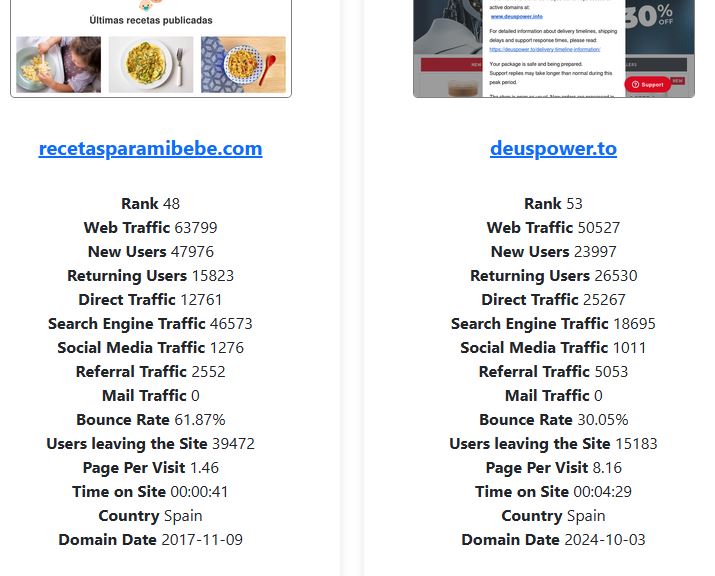
Use lookkle's Website Competitor Analysis Tool to analyze the web traffic and its sources of your top competitors' websites. This allows you to analyze any public website without needing access to its Google Analytics. Simply enter your website's URL and you'll get:
- Estimated monthly traffic volume of the top 20 competitor sites : Find out if your competitor receives 10,000, 50,000, or 500,000 visits per month
- Main traffic sources : Identify where your visitors come from (organic search, social media, direct links, artificial intelligence)
- User interaction with each site : Observe if users easily leave each site, the time they stay on each site, and the creation date of each site.
Practical example : Maria analyzes the three top recipe blogs in her niche and discovers that they all receive between 40,000 and 80,000 monthly visits. She then analyzes the sites that rank from page 30 onwards in Google. Now she knows she has enormous growth potential and can study the websites that rank on pages 1 and 2 of Google and what strategies they are using.
👉 Try lOOkkle's SEO tools for free today
Problem #2: "I invest in SEO but I don't know if it works"
The real scenario
Carlos has been paying an SEO agency for six months to improve the ranking of his handmade goods store. They send him monthly reports with keyword rankings, but he doesn't understand if this translates into more real traffic and where exactly it's coming from.
The underlying problem
Many webmasters confuse useless metrics like website ranking (positions in rankings) with metrics that matter (real traffic and direct sales).
Furthermore, they lack clear visibility into what percentage of their traffic actually comes from organic searches (from search engines like Google or Bing) versus other sources (from social networks or GPT Chat).
The solution
Traffic source analysis shows you exactly:
- Percentage of organic traffic (search engines) : Is your SEO investment really working?
- Paid vs. organic traffic : Identify if you are overly reliant on paid advertising
- Direct and referral traffic : Measure your brand recognition
- Traffic from social media : Evaluate which platforms bring you the most visitors
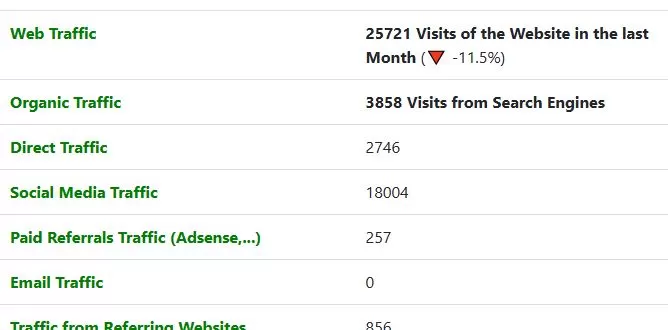
Practical example : Carlos discovers that only 15% of his traffic comes from organic search, while 60% comes from Facebook ads. This indicates that his SEO strategy needs more time or a different approach, and that he should diversify his sources to reduce his reliance on paid advertising.
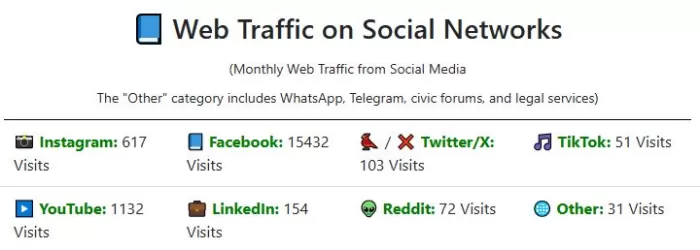
To increase organic traffic to a website, Carlos can implement several effective strategies:
-
On-Page Optimization : Improve content with relevant keywords, attractive titles and meta descriptions, and a clear structure to facilitate search engine crawling.
-
Quality Content Creation : Publish useful and original articles, guides, and resources that answer audience questions and are shared on social networks and forums.
-
Link Building : Obtaining quality links from other related websites and blogs, whether through collaborations, guest posts, or mentions in articles.
-
Technical Optimization : Ensure your site is fast, responsive, and mobile-friendly, and fix technical errors such as broken pages or misconfigured redirects. Use an on-page SEO analysis tool to determine if your site is properly optimized.
👉 Try lOOkkle's SEO tools for free today
Problem #3: "I have a high bounce rate and I don't know why"
The real scenario
Laura manages the website for a yoga studio. Google Analytics shows her that her bounce rate is 75%, but she doesn't know if this is normal in her industry or if she has a serious problem that she needs to address urgently.
The underlying problem
Bounce rate alone doesn't tell you much without context. An informational blog might have high bounce rates because users arrive, read the article, and leave satisfied. But for a service or e-commerce site, a high bounce rate indicates that something is wrong.
The solution
You can analyze similar sites in your industry to gain context:
- Compare your bounce rate to that of your direct competitors
- Identify common patterns : Do all sites in your niche have similar rates?
- Analyze the average time on the site : If people bounce but spend time reading, it may not be a problem
Practical example : Laura analyzes five other yoga websites and discovers that they all have bounce rates between 60-80%. This reassures her and allows her to focus on improving other aspects such as time on page and most visited pages, instead of obsessing over the bounce rate.
Research competitor websites by searching Google for your most successful keyword. Collect those websites that rank slightly higher than yours, then use Lookkle's web traffic analysis tool to obtain the bounce rate for each of those sites. A lower bounce rate is crucial for achieving better Google rankings.
For a more practical approach, if you don't want to waste time, you can use Lookkle's competitor analysis tool to discover the top 20 competitor websites. The tool will directly show the bounce rate for each of those 20 sites, so you can investigate which sites have the lowest bounce rates and try to replicate some of their methodologies to encourage users to interact more with those sites.
Remember, a low bounce rate is positive because it indicates that visitors are interacting with your site, exploring multiple pages, and finding the content useful and engaging. A low bounce rate is often associated with good design, relevant content, and a positive user experience, which can improve search engine rankings and sales.
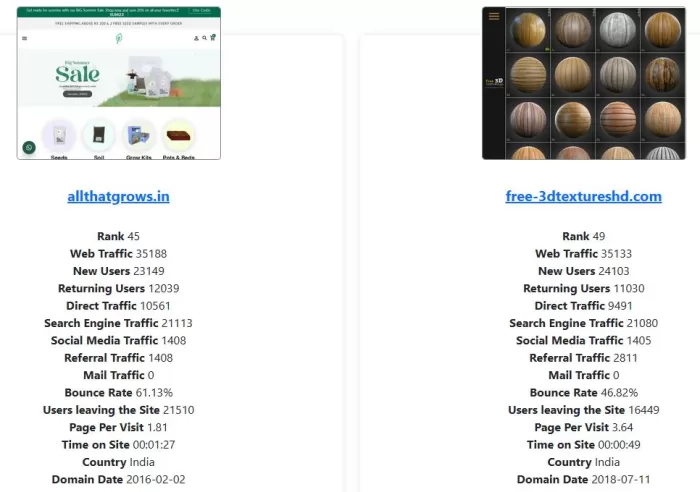
To improve a website's bounce rate, the following methods should be applied:
-
Improve user experience : Design your site intuitively, with clear and fast navigation, and make sure it is mobile-responsive.
-
Create high-quality content : Publish articles, guides, or resources that answer your audience's questions and keep them interested.
-
Improve website loading time : A fast site reduces frustration and prevents visitors from leaving before seeing the content.
-
Add calls to action (CTAs) : Include internal links, buttons, and suggestions to encourage users to continue browsing your site.
-
Improve the visual design : Use images, videos, and formats that make reading and interaction more attractive.
👉 Try lOOkkle's SEO tools for free today
Problem #4: "I don't know what content to create to attract more traffic"
The real scenario
David has a technology blog, but he feels his articles aren't generating the traffic he expected. He writes about topics he finds interesting, but he's not sure what his potential audience is really looking for.
The underlying problem
Creating content without market research is like shooting blindfolded. You need to know which keywords are performing well in your niche and what type of content attracts the most visitors.
The solution
- Top organic keywords for any site. Lookkle's Organic Keywords tool lets you see a website's top keywords and which pages are driving the most traffic. This allows you to create similar pages and improve content to try and achieve better search engine rankings and, consequently, more visits.
- Pages with the most traffic : Identify what type of content performs best. Use a competitor analysis tool to discover which websites similar to yours have the most traffic. From there, find out which are their most successful pages and replicate them.
- Backlink analysis : Discover which content generates the most external links. With Lookkle's web traffic analysis tool, you can discover the backlinks of any site and which pages receive the most links.
Practical example : David analyzes the three most successful technology blogs and discovers that their most visited articles are step-by-step guides on device setup and product comparisons. He decides to pivot his content strategy towards these formats and doubles his traffic in 3 months.
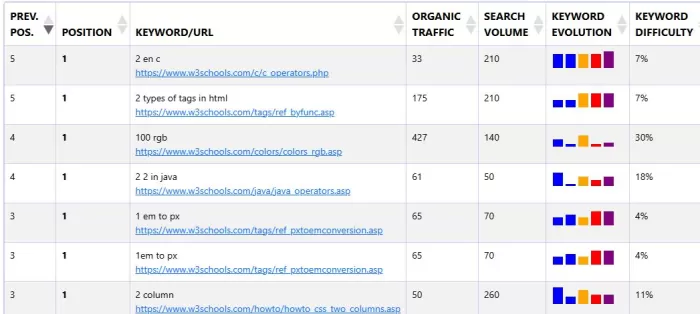
👉 Try lOOkkle's SEO tools for free today
Problem #5: "My audience isn't converting"
The real scenario
Andrea sells online courses and receives 10,000 monthly visits, but her conversions are minimal. She suspects she's attracting the wrong audience, but has no way of confirming it.
The underlying problem
Not all visitors are created equal. Low-quality traffic (wrong audience, inadequate geolocation, unoptimized devices) generates high numbers but low sales.
The solution
Analyze detailed demographic and geographic data:
- Geographic distribution : See which countries your visitors are coming from (top 5 countries)
- Types of devices : Desktop vs. mobile vs. tablet
- Demographics analysis : Better understand your audience
The following data can be viewed using Lookkle's web traffic analysis tool :
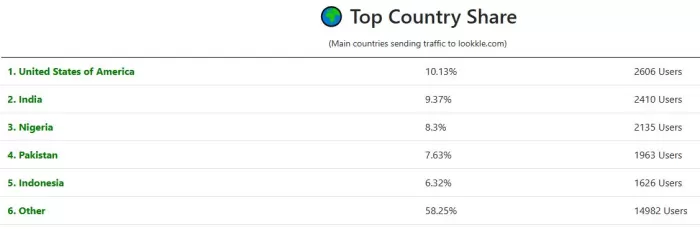
Practical example : Andrea discovers that 70% of her traffic comes from countries where her courses are too expensive for local purchasing power. Furthermore, 80% of her visitors are on mobile, but her course platform isn't optimized for mobile devices. Now she knows exactly which problems to solve to improve her conversions.
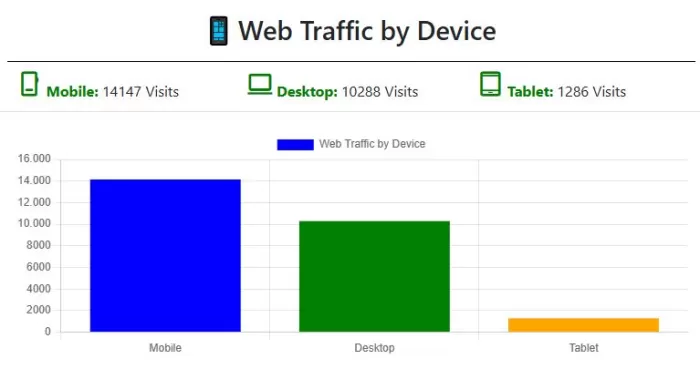
To solve Andrea's problems, the following actions can be taken:
-
Adjust prices by region : Offer prices adapted to the purchasing power of each country, such as discounts, monthly plans, or more economical basic versions.
-
Optimize for mobile : Redesign the platform to be responsive, with easy navigation, fast loading times, and compatibility with different mobile devices.
-
Create local content : Adapt content and communication to each market, using local examples, references, and currencies.
-
Promote on mobile channels : Use social media and mobile applications to reach users on their favorite devices.
-
Gather feedback and analyze data : Ask users about their needs and use analytics tools to identify bottlenecks and opportunities for improvement.
Problem #6: "I launch campaigns but I can't measure their real impact"
The real scenario
Roberto launched a social media content campaign two months ago. It received many likes and shares, but he doesn't know if it actually translated into more web traffic, and if so, to what extent.
The underlying problem
Social media metrics (likes, shares, comments) don't always correlate with actual web traffic. You need to see the evolution of your visits over time to understand the impact of your campaigns.
The solution
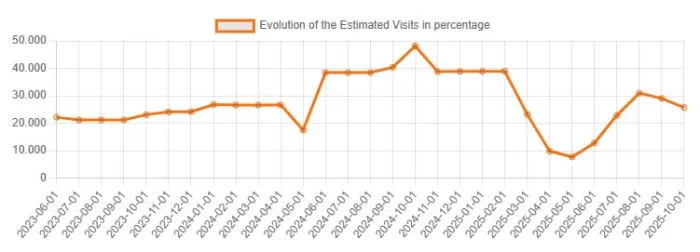
Visualize the evolution of traffic over time:
- Monthly trend charts : Identify traffic peaks and drops
- Correlate events with changes : Did that campaign actually generate more visits?
- Compare before and after : Measure the real impact of your initiatives
Practical example : Roberto sees his traffic increase from 8,000 to 15,000 visits right after his viral Instagram campaign. This confirms that investing in that platform is profitable, and he decides to increase his social media budget.
With Lookkle's web traffic analysis tool, you can see how traffic has evolved over time:
👉 Try lOOkkle's SEO tools for free today
Problem #7: "I want to enter a new niche but I don't know if it's viable"
The real scenario
Sofia is considering creating a website about urban gardening, but before investing time and money, she wants to validate that there is actually an audience and demand for this topic.
The underlying problem
Launching a web project without validating the market is risky. Many digital entrepreneurs invest months creating content for niches with little or no demand.
The solution
Conduct instant market research:
- Analyze existing sites in the niche : How much traffic do they receive?
- Identify opportunities : If there are few sites and good traffic, it's an opportunity
- Evaluate the competition : Is the niche saturated or is there room to grow?
Practical example : Sofia analyzes the top 10 websites about composting and urban gardening. She discovers that the largest ones receive between 3,000 and 5,000 monthly visits, and that the competition is very high, so she concludes that there is no room for more specialized content in her language.
To do this, first perform keyword analysis for your main keyword using Lookkle's keyword analysis tool , primarily highlighting keywords with low competition and high search volume.
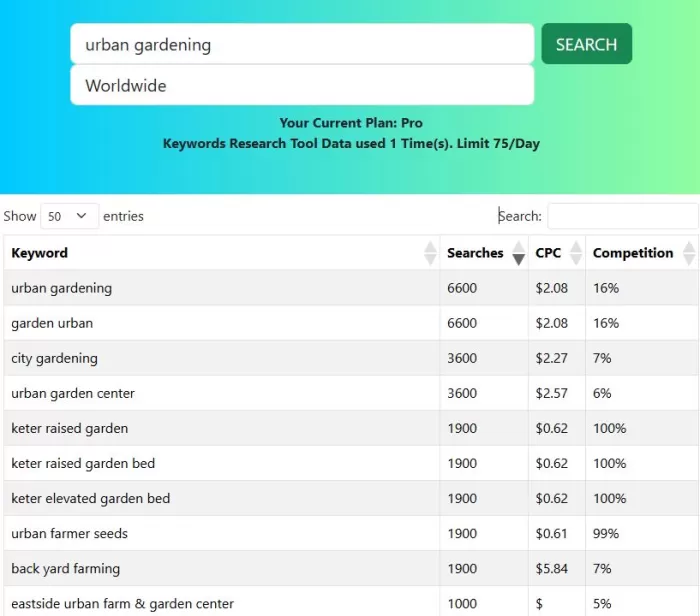
Then, for each of these keywords, perform a Google search and verify that the first 10 sites exclusively discuss content related to the keyword. If not, it indicates low competition. For your keyword "urban gardening," the competition is high, as you can see from Google.
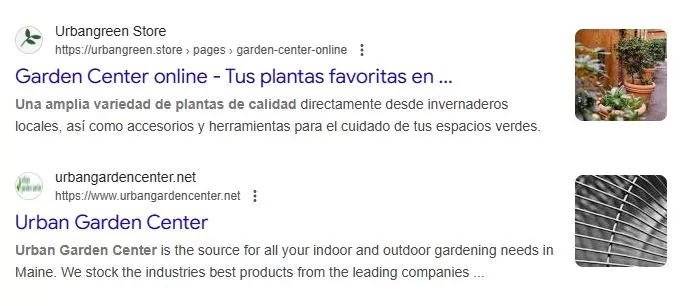
Even so, it analyzes the traffic of the main sites.
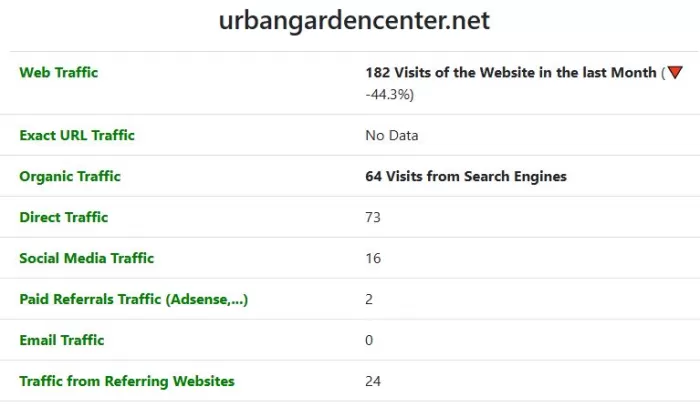
She checks that the number 9 site on Google only has 182 visits, and even then, it's slightly decreased in the last month. So, given the high competition and low traffic, Sofia decides to look for another site with a similar theme and not risk it with this type of website.
👉 Try lOOkkle's SEO tools for free today
Why use Lookkle's web traffic analysis tools?
Key advantages:
1. Barrier-free analysis. You don't need access to Google Analytics or special permissions. Analyze any public website in the world in seconds.
2. Actionable Data You don't just receive numbers, you gain insights that you can turn into concrete strategies:
- Identify content opportunities
- Discover underutilized traffic channels
- Find competitive gaps you can exploit
3. Save time and money. Instead of hiring expensive market research firms or relying solely on premium tools, you get professional competitive analysis for free.
4. Make data-driven decisions. Stop guessing and start knowing. Every decision about content, advertising, or product development can be backed by real data.
5. Continuous Benchmarking: Regularly monitor your progress against the competition. Celebrate your victories when you surpass key competitors and adjust when you fall behind.
Specific Use Cases
For bloggers and content creators
- Identify which topics generate the most traffic in your niche.
- Discover new competitors to follow
- Validate content ideas before investing time in creating them
For e-commerce
- Analyze the traffic sources of successful stores in your sector
- Identify geographic expansion opportunities
- Compare your performance with marketplaces and direct competitors
For marketing agencies
- Offer competitive analytics to your clients at no extra cost.
- Identify growth opportunities in current campaigns
- Justify strategies with industry data
For investors and entrepreneurs
- Validate digital business ideas before investing
- Conduct due diligence on existing web businesses
- Identify emerging trends in different sectors
How to Start Using Lookkle's SEO Tools
Sign up for free or try all the tools for just $3.95 a day.
It's incredibly simple, for example, analyzing the web traffic of any site:
- Visit Lookkle Web Traffic Checker
- Enter the URL of the site you want to analyze (yours or a competitor's)
- Get instant results with key traffic metrics
- Delve deeper into the data : traffic sources, geography, devices, keywords, and more
No software installation or registration is required for basic analysis. You can start making informed decisions in under 30 seconds.
Conclusion: From Problem to Solution
Webmasters face dozens of daily challenges: from understanding their competitive position to validating whether their strategies are working. The difference between online success and failure often lies not in working harder, but in working with better information.
Lookkle takes the guesswork out of the equation. It gives you access to the kind of competitive intelligence that was previously only available to large corporations with multimillion-dollar budgets.
Whether you're launching your first blog, scaling your online store, or managing multiple digital properties, having access to real web traffic data gives you an undeniable competitive advantage.
The question isn't whether you can afford to use this tool. The question is: can you afford to keep making decisions without real data?
Frequently Asked Questions
Is the data accurate? While these are estimates based on AI algorithms and big data analysis, the accuracy is very high, especially for sites with significant traffic. It's ideal for benchmarking and competitive analysis.
Is it legal to analyze competitor websites? Absolutely legal and safe. All analysis is external and based on public data, without access to private information.
Do I need technical knowledge? No. The interface is intuitive and the results are presented visually and are easy to understand.
Can I analyze multiple sites? Yes. While there's a free version with basic features, you can register for access to unlimited analyses and advanced features.