Reading Time 7
Number of Words 1397
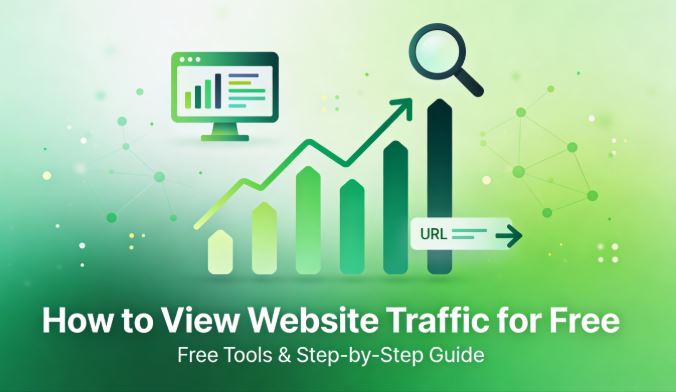
In 2026, knowing your website traffic is no longer optional , especially if you are self-employed, a freelancer, or a small digital business.
Knowing how many visits a site has, where they come from, and which pages perform best allows you to make data-driven decisions , not assumptions.
In this guide you will learn how to find out the traffic of a website for free , step by step, with real examples designed for freelancers .
What is a web traffic analysis tool?
A web traffic analysis tool is a free online tool that allows you to analyze the estimated traffic of any website, including:
-
Estimated monthly visits.
-
Monthly visit history.
-
Traffic by country.
-
Traffic sources (organic, social, direct, referral).
-
Devices (desktop vs mobile).
-
Main pages.
-
Similar competitors.
-
User interaction with the web.
All without the need for installation.
👉 Ideal for freelancers, marketers, SEOs, content creators and digital entrepreneurs .
Why Does a Freelancer Need to Analyze Web Traffic in 2026?
If you work for yourself, you'll probably identify with some of these situations:
-
You have a website but you don't know if it's growing.
-
Do you want to copy your competitors' strategies?
-
You need to justify prices to customers
-
You don't know whether to invest in SEO, social media, or ads
Traffic analysis helps you to:
✅ Identify business opportunities
✅ Find profitable niches
✅ Improve your SEO strategy
✅ Prioritize actions with real impact
How to Use Lookkle's Web Traffic Analysis Tool (Step by Step)
Step 1: Access Lookkle
Go to lookkle.com and visit the Web Traffic Checker section .
You don't need to create an account for basic analysis.
Step 2: Enter the URL to Analyze
Enter the domain you want to analyze, for example:
yourdomain.com
You can also analyze competitor websites .
Click on Check Traffic .
Step 3: Interpret the Main Results
In seconds you'll see a panel with key metrics.
Example 1: Freelance Web Designer
Case: Laura is a freelance web designer and wants to analyze a competitor's website.
Key Results:
-
Monthly visits: 38,000
-
Main country: USA (62%)
-
Organic traffic: 71% (visits from search engines like Google or Bing)
-
Mobile devices: 68%
Decisions you can make:
✔ Invest more in SEO.
✔ Optimize your website for mobile.
✔ Create targeted content.
✔ Analyze which keywords your competitors are ranking for.
Example 2: Freelance SEO or Digital Consultant
Realistic case: preparing an SEO proposal that actually convinces
Profile:
Marcos is a freelancer who offers SEO services to small and medium-sized businesses.
He has experience and knows how to rank websites, but he faces a common problem:
❌ Many clients don't understand the value of SEO
❌ They compare prices without understanding the differences
❌ They hesitate because "they've already tried it before"
Marcos knows that explaining SEO with words alone isn't enough .
He needs to demonstrate opportunities with data .
Step 1: Compare customer traffic vs competitors
Before making any proposal, Marcos analyzes:
-
The customer's website
-
3-5 direct competitors in the same sector
Using Lookkle's Web Traffic Checker , you get the following in minutes:
-
Estimated monthly visits
-
Percentage of organic traffic
-
Main countries
-
Predominant devices
Example of detected data:
Client website:
-
4,200 visits/month
-
35% organic traffic
-
Mostly direct traffic
Competitor A:
-
38,000 visits/month
-
72% organic traffic
Competitor B:
-
21,000 visits/month
-
65% organic traffic
How to use it in the proposal:
Marcos does not say:
“Your SEO is bad”
Says:
“Your competitors are capturing between 5 and 9 times more traffic from Google.”
This completely changes the customer's perception:
-
It's no longer an opinion
-
It is a measurable fact
👉 The customer understands the problem in seconds .
Step 2: Show historical growth (the impact of SEO over time)
Many believe that SEO:
-
Not working
-
It's slow
-
It's a lottery
With Lookkle, Marcos can visualize the evolution of traffic .
What it analyzes:
-
Competitor growth trend
-
Times when traffic increases
-
Comparison with customer stagnation
Clear example for the client:
Marcos shows that:
-
Competitor A grew from 10,000 to 38,000 visits in 18 months
-
The client has been stuck for 2 years
Implicit message:
"It's not that your sector isn't working.
It's that others are already doing SEO."
This point is key because:
-
The customer stops doubting the channel.
-
She begins to fear being left behind.
👉 SEO ceases to be an expense and becomes a defensive and offensive investment.
Step 3: Identify pages with the most visits (pure gold for the proposal)
Here Marcos gains authority.
Lookkle identifies :
-
The pages that receive the most traffic in the competition
-
What type of content ranks well
-
Whether they are services, blogs, guides or comparisons
Example detected:
Competitor A receives most of its traffic from:
-
“SEO services for e-commerce”
-
“SEO consultant price”
-
“Professional SEO Audit”
While the client:
-
It only has a generic services page
-
Without targeted content
-
No specific pages
How Marcos translates it:
Instead of promising “more traffic”, he proposes:
“We are going to create these 3 specific pages because they are the ones that are working in your sector.”
This generates:
-
Trust
-
Clarity
-
Feeling of a real plan
👉 The client sees what will be done , not just "SEO work".
Step 4: Identify quick SEO opportunities
One of the biggest fears of the customer is:
"When will I see results?"
With Lookkle, Marcos detects quick opportunities .
Examples of quick wins:
-
Client pages with some traffic but poorly optimized
-
Keywords where the competitor ranks with mediocre content
-
Underutilized niches within the sector
Typical case:
Marcos sees that:
-
The competitor receives traffic from “freelance SEO consultant”
-
The content is short and poorly produced.
Conclusion:
“We can create a better optimized page and compete quickly.”
This allows Marcos to say:
“Not everything is long-term; some actions have an impact in weeks.”
👉 This reduces friction and speeds up the closing process.
Example 3: An Entrepreneur's Online Store
Realistic case: validate a niche before investing money
Profile:
Ana wants to launch a small online store . It's not a big brand or a startup with investors. She's an entrepreneur who will invest.
-
Your own money
-
Your time
-
Your energy
Before spending on:
-
Stock
-
Advertising
-
Web design
-
Logistics
Ana asks the right question:
"Is this niche really in demand, or is it just me who likes it?"
This is where Lookkle becomes a key tool for reducing risk .
Step 1: Analyze the traffic of leading stores in the niche
Instead of relying on intuition, Ana uses Google to search and Lookkle to analyze:
-
Leading stores in the niche
-
Medium-sized e-commerce (more realistic)
-
Projects that started small
What you get with Lookkle:
-
Estimated monthly visits
-
Traffic sources (organic, social, direct)
-
Traffic evolution
-
Main pages
Practical example:
Ana wants to sell eco-friendly pet products .
Analyze with Lookkle:
-
3 large stores
-
2 medium-sized stores
Discover that:
-
All of them exceed 100,000 monthly visits
-
60–75% of traffic is organic
-
They have had stable growth for years.
Conclusion:
👉 The niche is not a passing fad, it is a real market.
Step 2: See which countries generate the most visits (key for e-commerce)
One of the biggest mistakes when launching an online store is not properly defining the geographic market .
With Lookkle, Ana can see:
-
Countries with the most traffic
-
Relative weight of each country
-
Differences in behavior by region
Revealing example:
The data shows:
-
Spain: 45% of traffic
-
Mexico: 25%
-
Argentina and Colombia: 15%
-
Other countries
This completely changes the strategy:
✔ Language and tone
✔ Payment methods
✔ Pricing
✔ Logistics
✔ Future campaigns
Ana discovers that:
“My store doesn’t have to be just local. It can scale to Latin America.”
Step 3: Detect seasonality (avoid costly mistakes)
Many entrepreneurs fail because they do not understand market cycles .
Lookkle allows you to analyze:
-
Evolution of traffic over time
-
Peaks and troughs
-
Strong months and weak months
Clear example:
Ana observes that:
-
Traffic increases sharply between October and December
-
It drops significantly in summer
-
It happens every year.
Strategic conclusion:
-
The niche depends on campaigns and key dates
-
It's not constant traffic all year round.
Thanks to this:
-
Plan stock correctly
-
Do not overinvest in slow months
-
Take advantage of peak times with special offers
👉 Seasonality is no longer a surprise.
Step 4: Evaluate whether the market is growing or stagnating
Here is one of the most important points.
With Lookkle, Ana analyzes:
-
Historical traffic from previous years
-
General trend of the niche
-
Comparison between several stores
Two possible scenarios:
Scenario A: growing market
-
Traffic increases year after year
-
New stores appear
-
Google shows more searches
👉 Clear sign to invest.
Scenario B: stagnant or declining market
-
Flat traffic
-
Excessive dependence on ads
-
Spot spikes without real growth
👉 High risk for a new project.
Ana sees that her niche:
-
It grows steadily
-
It does not show sudden drops
-
It maintains constant demand.
Conclusion:
“It’s not a blind bet. It’s a market with a future.”
Step 5: Analyze which pages indirectly generate sales
Although Lookkle doesn't show sales, it does show which pages generate traffic .
Ana detects:
-
Most visited categories
-
Star products
-
Informative content that attracts visitors
Example:
A leading store receives a lot of traffic from:
-
“Best organic dog snacks”
-
“How to feed your pet naturally”
Conclusion:
-
Educational content drives sales
-
Not everything is direct product
👉 Ana decides to include blog + SEO from the start.
Step 6: Copy strategies that already work (without guessing)
With Lookkle, Ana doesn't invent:
-
Copy structures
-
Copy categories
-
Copy content types
But:
-
Improve descriptions
-
Improve mobile UX
-
Adjust prices and messages
Result:
👉 Less trial and error
👉 More focus
👉 Less unnecessary spending
Which Metrics Should You Look at First (If You're Self-Employed)
If you don't want to get lost in the data, focus on:
-
Estimated monthly visits
-
Percentage of organic traffic
-
Main countries
-
Top pages
-
Similar competitors
These metrics already give you 80% of the real value .
Advantages of Lookkle's Web Traffic Checker Compared to Other Tools
-
✅ Free and with registration you get many options.
-
✅ Clear and fast interface.
-
✅ Ideal for quick analysis.
-
✅ Designed for marketers and freelancers.
-
✅ Perfect for validating business ideas.
Final Tips to Get the Most Out of It
-
Analyze your website and the websites of 3 competitors
-
Repeat the analysis every month.
-
Save screenshots to compare evolution.
-
Combine Lookkle with Google Search Console on your own website.
-
Use data to create smarter content.