Reading Time 4
Number of Words 724
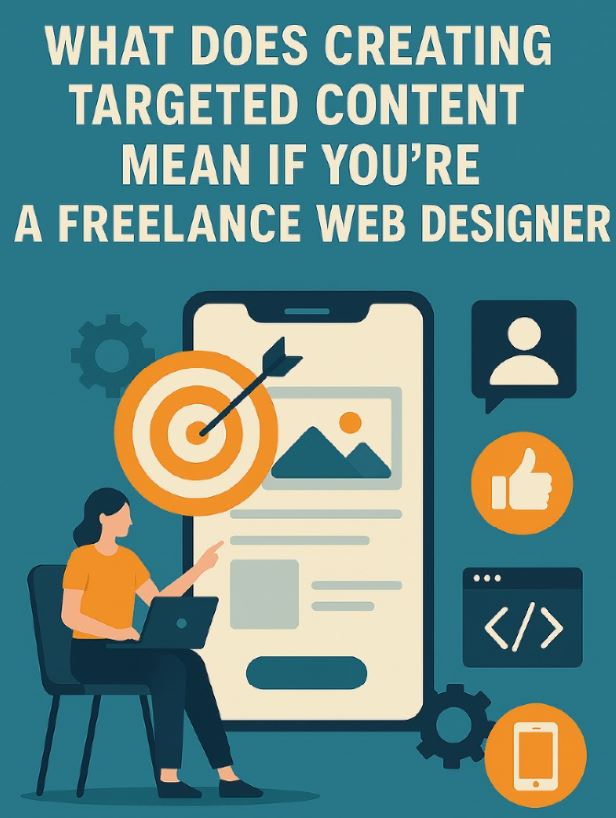
Many freelance web designers hear phrases like:
-
“You have to create content”
-
“Invest more in SEO ”
-
“ Start a blog ”
But rarely does anyone explain what kind of content , for whom , and with what objective .
In this article we're going to clarify a key concept for any freelance web designer in 2026 :
👉 creating targeted content .
It's not about writing generic articles, but about creating content designed to attract real customers , using data and analysis with tools like Lookkle .
What is Targeted Content (in one sentence)
Creating targeted content means creating pages and articles:
Designed to attract a specific type of customer, at a specific time, with a clear intention to hire.
It's not content to "get views", it's content to generate business .
The Most Common Mistake Freelance Web Designers Make
Many web designers create content like this:
-
“What is web design?”
-
“History of web design”
-
“Why having a website is important”
These articles:
-
They have enormous competition.
-
They attract a low-skilled public
-
They don't convert into customers
Creating targeted content is about avoiding this mistake from the start .
The Real Goal of a Freelance Web Designer
Before discussing content, we need to be clear:
👉 The goal is NOT to have a pretty blog
👉 The goal is to get clients
All content must answer this question:
Could this bring me a client in the coming months?
If the answer is "no", it is not targeted content.
Step 1: Define Who You Want to Attract
A web designer shouldn't appeal to "everyone".
Examples of specific profiles:
-
Self-employed and freelancers
-
Restaurants
-
Clinics
-
Coaches
-
Small e-commerce
-
Local businesses
Creating targeted content starts with choosing .
Step 2: Analyze the Market with Lookkle
This is where most fail… and where Lookkle makes the difference.
With Lookkle's traffic analysis tools you can:
-
Analyze websites of other web designers
-
See how many visits they receive
-
Detect where your traffic is coming from
-
Identify the most effective pages
-
View dominant countries and devices
Realistic example:
You analyze 3 freelance web designers with Lookkle.
You discover that:
-
70% of its traffic is organic (Google or Bing).
-
The most visited pages are not the portfolio.
-
They receive traffic for very specific articles.
👉 That already gives you clear clues about what content to create.
Step 3: Identify Content That Already Works (Don't Guess)
Creating targeted content is not about inventing topics , it's about detecting opportunities .
Example detected with Lookkle:
You see that several competitors are receiving traffic from pages like:
-
“Web design for restaurants”.
-
“Website price for self-employed or freelancers”.
-
“WordPress web design for local businesses.”
Conclusion:
There is real demand for that type of content.
Step 4: Content Types Oriented for a Web Designer
1. Content Targeted by Customer Type
These are the most profitable .
Examples:
-
“Web design for freelancers: examples and prices.”
-
“Restaurant websites: what they should include.”
-
“Web design for private clinics.”
Why they work:
-
The reader recognizes themselves.
-
He feels identified.
-
The intention is commercial.
Lookkle allows you to see, by analyzing other competitor websites:
-
If that content generates traffic.
-
In which countries?
-
What is their estimated volume?
2. Price-Oriented Content
Many designers avoid talking about prices. Mistake.
Examples:
-
“How much does a website cost in Spain in 2026?”
-
“Freelance web design pricing: what’s included.”
This content:
-
They filter out bad customers.
-
They attract determined customers.
-
They generate quality leads.
With Lookkle you can validate:
-
If other designers receive traffic from those types of pages.
-
What is their estimated traffic?
-
You simply have to search on Google and analyze these pages that rank well.
3. Content Oriented to a Specific Service
Not just “web design”.
Examples:
-
“WordPress web design for freelancers or self-employed individuals”
-
“Professional web redesign”
-
“Landing pages for lead generation”
This content promotes specific services , not generic ones.
4. Comparative Content (Very Powerful)
The user is already evaluating options.
Examples:
-
“WordPress vs Webflow for small businesses”
-
“Template vs. custom web design”
Very high commercial intent.
Step 5: Focus Content on Conversion (Key)
Creating targeted content is not just about attracting traffic, it's about converting it .
Each piece of content must:
-
Have clear CTAs
-
Show real examples
-
Include related services
-
Facilitate contact from mobile
Example:
An article about “Web Design for Restaurants” should include:
-
Examples of websites
-
Common problems in the sector
-
Concrete solutions
-
“Request a quote” button
Step 6: Prioritize with Lookkle Data
Don't try to create 50 pieces of content at once.
Correct strategy:
-
Analyze competitors with Lookkle
-
Detects 5–10 pages that bring them traffic
-
Create similar but better content
-
Optimize only those pages
👉 Less content, better targeted.
Complete Example of a Realistic Strategy
Profile:
Freelance web designer in Spain.
Lookkle Analysis:
-
Competitors with 30,000–50,000 visits/month
-
3 pages generate 60% of the traffic
-
All geared towards specific niches
Content created:
-
Web design for freelancers or self-employed individuals
-
Website price in a specific country
-
WordPress web design for small businesses
Expected result:
-
Qualified traffic
-
Better filtered leads
-
Fewer missed calls
-
More professional authority
Common Mistakes When Creating Content
❌ Write for everyone
❌ Copy generic texts
❌ Don't analyze the competition
❌ Don't include CTAs
❌ Measure only visits, not leads
In Summary: What Does Creating Targeted Content Mean
For a freelance web designer, creating targeted content means:
✔ Speak to a specific customer.
✔ Solve a specific problem.
✔ Use real data.
✔ Think about conversion.
✔ Prioritize quality over quantity.