Reading Time 3
Number of Words 542
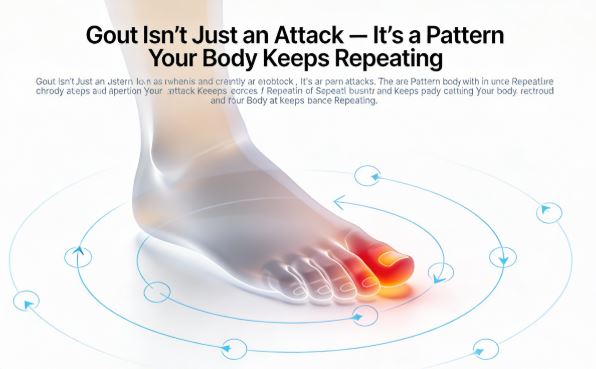
Most people think of gout as a single event: a swollen toe, a few days of pain, then life goes back to normal. In reality, gout behaves more like a loop than a one-time problem. Once it appears, it tends to follow a recognizable cycle unless something changes underneath.
Understanding that cycle is often the key to stopping future flares.
The First Flare Is Rarely the Real Beginning
For many people, the first gout attack feels sudden and unexplained. But long before the pain starts, the body has already been struggling to manage uric acid levels. This silent phase can last for years with no symptoms at all.
By the time pain appears, the problem has usually been building quietly:
-
uric acid levels have stayed elevated for a long time
-
joints have become a “landing zone” for irritation
-
inflammation is primed, waiting for a trigger
This is why the first flare often feels out of proportion to anything you did that day.
Why Gout Attacks Love the Night
One strange feature of gout is timing. Attacks frequently begin late at night or early morning. This isn’t random.
During sleep:
-
body temperature drops slightly
-
hydration levels fall
-
circulation slows in the extremities
These conditions make joints more vulnerable to inflammation, especially in areas like the big toe or ankle. This explains why people often wake up with pain rather than feeling it develop gradually.
The “Good Period” That Causes Trouble
After an attack settles, many people feel completely normal again. This pain-free phase can last weeks or months, which creates a false sense of resolution.
But this symptom-free period is where gout often worsens quietly. Without ongoing management:
-
uric acid continues to circulate at high levels
-
inflammation risk remains active
-
future attacks become more frequent and severe
This is why gout is often described as episodic but progressive.
Gout Rarely Travels Alone
Although pain shows up in a joint, gout often reflects wider metabolic stress in the body. Many people with gout also deal with:
-
high blood pressure
-
insulin resistance or diabetes
-
kidney strain
-
weight fluctuations
Because of this, gout often acts as an early warning sign rather than an isolated joint problem.
Why “Just Changing Diet” Isn’t Always Enough
Food choices do influence gout, but they are rarely the whole story. Two people can eat the same diet and have completely different uric acid levels.
Factors that often matter just as much include:
-
how efficiently the kidneys remove uric acid
-
genetic differences in metabolism
-
medication interactions
-
body weight changes over time
This is why long-term gout control usually involves more than avoiding specific foods.
The Emotional Side of Flare Anxiety
People living with gout often describe a constant low-level fear of triggering the next attack. This can lead to:
-
avoiding social events involving food
-
anxiety around travel or long walks
-
frustration when flares seem unpredictable
Learning how gout behaves over time helps reduce this uncertainty and gives patients more control over daily decisions.
Why Rheumatology Plays a Key Role
Because gout is both inflammatory and metabolic, it benefits from specialist oversight. Rheumatologists focus not only on stopping flares, but on preventing the conditions that allow them to return.
A Different Way to Think About Gout
Rather than viewing gout as something that “comes and goes,” it’s more accurate to see it as a signal your body sends when balance is lost. The goal isn’t just to survive attacks—but to break the cycle that creates them.
With the right understanding and consistent care, many people move from unpredictable flares to long-term stability.