Reading Time 3
Number of Words 474
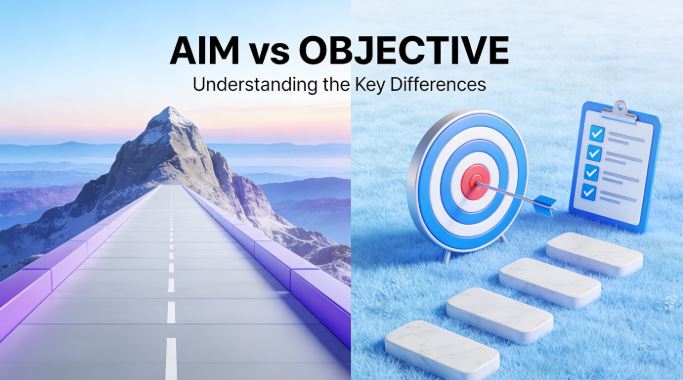
Understanding the distinction between "aim" and "objective" is essential for effective goal-setting, project management, and strategic planning.
While these terms are often used interchangeably, they represent different levels of specificity and serve distinct purposes in achieving success.
What is an Aim?
An aim is the ultimate goal or overarching purpose that an individual or organization strives to achieve. It represents the general direction, intent, or long-term outcome that guides all activities and decisions. Aims are broad, aspirational statements that answer the fundamental question: "What is to be achieved?".
Aims focus on the "why" of a project and are typically subjective and open-ended. They relate to hopes, ambitions, and the overall mission or purpose of an endeavor. For example, an aim might be "to become a leading expert in digital marketing" or "to build a sustainable business".
What is an Objective?
An objective is a specific, measurable, and time-bound target that stems from the broader aim. Objectives outline the concrete actions, outcomes, and deliverables necessary to achieve the aim. They answer the question: "How will it be achieved?".
Objectives are formulated based on the SMART framework (Specific, Measurable, Achievable, Relevant, Time-bound) to ensure they are well-defined and actionable. They represent the tactical steps and short-term targets that organizations or individuals must accomplish to progress toward their aims.
Key Differences Between Aim and Objective
| Aspect | Aim | Objective |
|---|---|---|
| Scope | General and broad | Specific and precise |
| Time Frame | Long-term, not time-bound | Short-term, with defined deadlines |
| Nature | Subjective and open-ended | Measurable and concrete |
| Focus | The "why" and purpose | The "how" and action steps |
| Relation | Strategy-level | Tactical-level |
| Measurement | Difficult to measure directly | Easily quantifiable |
| Flexibility | Remains constant over extended periods | Changes regularly as tasks are completed |
Practical Examples
To illustrate the difference, consider a startup company's strategic framework:
-
Aim: Become the market leader in innovative tech solutions by providing superior user experiences
-
Objectives: Launch user experience research program by Q2, redesign core product interface by Q4, implement customer success program by Q3, hire 50 additional engineers by end of year
In an educational context:
-
Aim: To become a qualified medical doctor
-
Objectives: Obtain A-grades in biology and chemistry exams, complete medical school entrance requirements within two years, gain clinical experience through internships
How Aims and Objectives Work Together
Aims and objectives are complementary elements that must work together for successful outcomes. The aim provides the overall direction and inspires long-term vision, while objectives break down that vision into manageable, actionable steps. Without clear aims, objectives lack purpose and direction; without specific objectives, aims remain abstract aspirations that are difficult to achieve.
Organizations and individuals should clearly define both their aims and objectives to align their efforts, track progress effectively, and ultimately accomplish their desired outcomes. Objectives should cascade from aims while maintaining specificity, ensuring that tactical effort translates into strategic progress.
The Relationship with Goals and Targets
In broader strategic planning, aims and objectives exist within a hierarchy that also includes goals and targets. Goals typically represent broad, ongoing aspirations similar to aims, while targets are specific, quantifiable metrics. Objectives function as the concrete steps and initiatives that execute strategy, hit targets, and advance goals.