lOOkkle

Website Ranking Checker Tool

SEO Metrics & Traffic Web, Backlink Statistics

What is Website Ranking Ckecker and what is it for?

The Website Ranking Checker is a powerful tool that helps any website owner understand how their site is performing online. With it, you can:

  • Track your global and country ranking to see how popular your site is compared to others.

  • Analyze the strength of your backlink profile, including doFollow links and referring domains.

  • Detect potential Risks in the links your site receives with the Link Spam Score.

  • Measure traffic levels and user engagement (visits, time on site, bounce rate, and pages per visit).

  • Discover where your visitors come from — organic search, direct visits, social media, or referrals.

  • Identify your top countries by traffic and understand your audience better.

  • Find out the position of each of your website's main pages in Google for the most frequently used search terms.

  • View the current and previous positions of each web page on your site, as well as its performance.

  • See if the main pages of the analyzed website are well positioned for high- or low-competition keywords.

  • Find out how much web traffic each of the main web pages analyzed receives from Google and other search engines for the keyword used in the search engine.

馃憠 In short, it gives you a complete overview of your online presence and actionable insights to help you grow.

How to get started

  1. Go to lookkle.com, in the top menu, click on "TOOL" and then click on "Website Ranking Checker Tool"

  2. Enter your domain name (example: mysite.com).

  3. Click on SEARCH.

  4. Within seconds, you’ll get a detailed report with all the key metrics.

Measurements made by lOOkkle's Web Ranking Tool

馃搳 Main Metrics in Website Ranking Checker

  • Global Rank (0–100)
    Represents a website’s position at the global level. A higher score (closer to 100) indicates better worldwide visibility, mainly based on site visits.

  • Country Rank (0–100)
    Shows the website’s ranking within its primary country. A value near 100 signals high local popularity and traffic, while lower scores indicate less relevance in that country.

  • Backlinks Rank (0–100)
    Measures the authority of the site based on its backlink profile. More backlinks and higher-quality referring domains increase the score, moving it closer to 100.

  • Link Spam Score (0–100)
    It measures the quality of a site's backlinks using a scale from 0 to 100, where 0 represents the best quality and 100 the worst. A high value indicates a link profile with predominantly spammy links. This index reflects the presence of toxic and unnatural backlinks that damage the website's authority and reputation.

Main Metrics in Website Ranking Checker

馃敆 Link & Authority Metrics

  • Total Backlinks
    The total number of backlinks pointing to the analyzed domain.

  • Main Domains
    The number of unique domains that provide backlinks. A higher count suggests a healthier and more diverse backlink profile.

  • Domain Rank
    A ranking of domains where the scale begins at 1. A Domain Rank of 1 corresponds to the most important and authoritative website on the Internet. Lower numeric values mean higher authority.

  • Popularity Score (0–10)
    A simplified score from 0 to 10 that indicates a website’s importance based on link popularity. A score of 10 denotes very high link popularity and broad recognition.

Link Authority Metrics

馃敆 Additional Link Metrics

  • Total doFollow
    The total number of doFollow backlinks pointing to the domain. These links pass SEO authority and contribute directly to ranking strength.

  • doFollow Domains
    The number of unique domains providing doFollow backlinks. More referring domains with doFollow links generally indicate a stronger and more natural backlink profile.

  • From Home Page
    The total number of backlinks that originate directly from other sites’ home pages. Such links are often more valuable due to their prominence and higher authority.

  • From Text Links
    The total number of backlinks embedded within text content. Text-based links are typically more contextually relevant and can carry stronger SEO signals.


馃搱 Web Traffic & Engagement Metrics

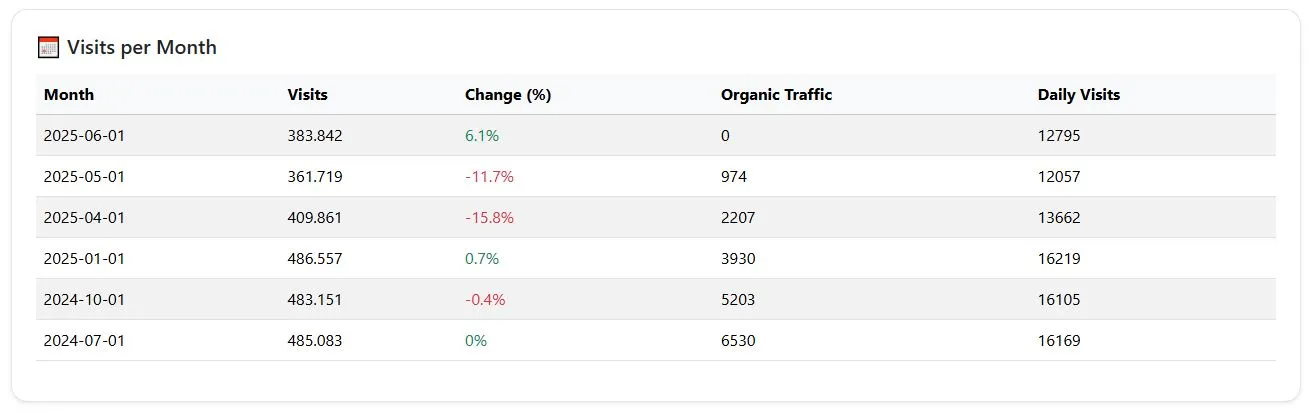
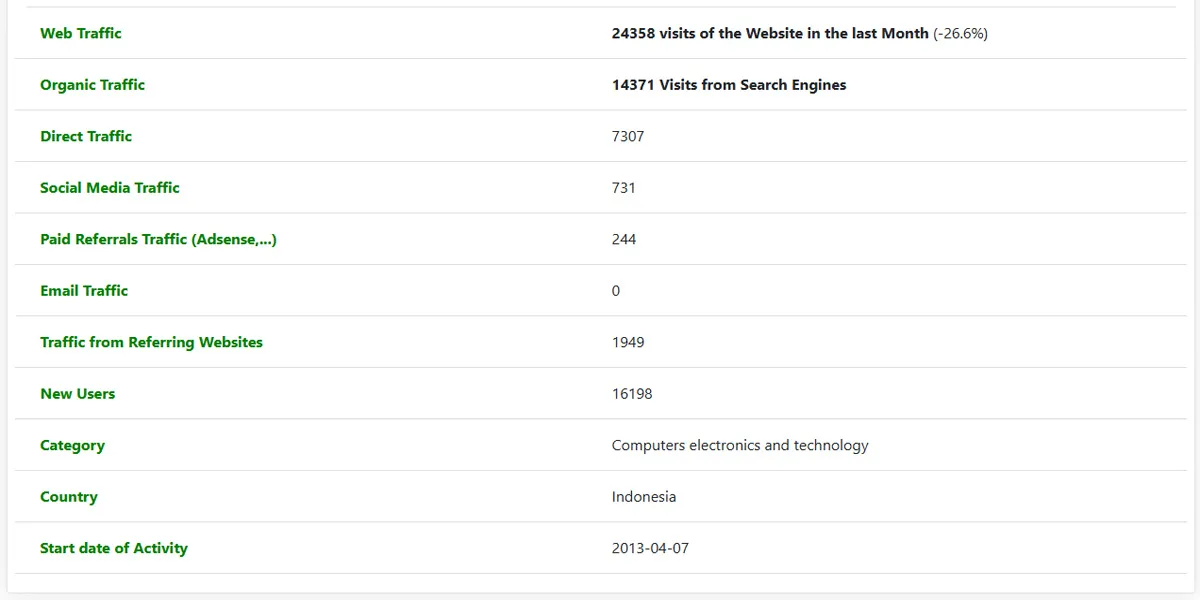
  • Web Traffic
    The total number of visits received by the website during the last month.

  • Bounce Rate
    The percentage of visitors who enter the site and leave without taking any further action or interacting with the content. Lower values indicate better engagement.

  • Pages Per Visit
    The average number of pages viewed by a visitor during a single session. A higher value reflects deeper engagement with the website.

  • Time On Site
    The average duration visitors spend on the site per session. Longer time indicates more engaging and relevant content.

Web Traffic & Engagement Metrics

馃寪 Traffic Sources

  • Organic Traffic
    Visits coming from search engines such as Google, Bing, or Yahoo. Indicates how well the site performs in search results.

  • Direct
    Visits from users who type the website’s URL directly into their browser or access it via bookmarks. A strong indicator of brand recognition.

  • Social Media
    Traffic generated from social platforms like Facebook, Twitter (X), Instagram, LinkedIn, etc. Reflects the site’s reach and engagement in social channels.

  • Referrals
    Visits arriving from external websites through links pointing to the analyzed site. Measures referral strength and partnership traffic.


馃實 Audience & Domain Info

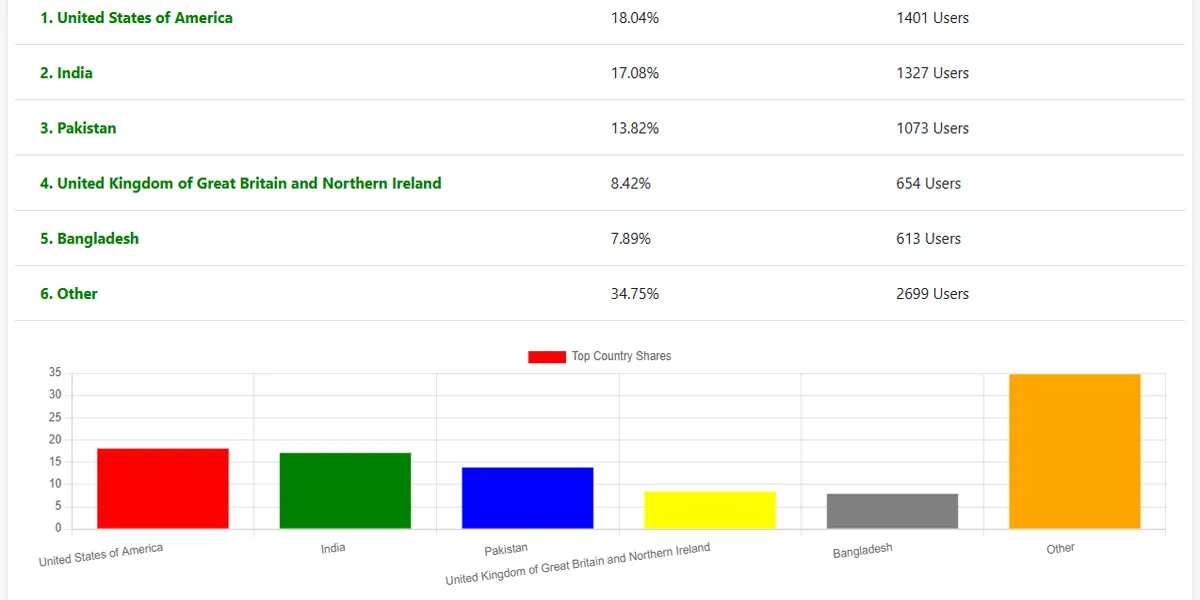
  • Main Countries
    The top 5 countries sending traffic to the website, displayed as percentages of total visits. Provides insight into the geographic audience distribution.

  • Domain Register Date
    The original registration date of the domain. Older domains often carry more trust and authority signals.

  • Country
    The primary country associated with the website (where it is registered or most relevant).

  • Category
    The main content or industry category of the website (e.g., News, E-commerce, Technology). Helps classify the site’s niche and purpose.

SEO Positioning and Traffic for Your Key Web Pages

Analysis of the approximate Google ranking of a site's most important web pages based on the keyword for which they rank best.
The data is displayed in a detailed table that includes:

  • PREV. POS: The previous Google ranking position for each page and keyword.
  • POSITION: The current position on Google.
  • KEYWORD/WEBURL: The main keyword along with the corresponding page URL.
  • TRAFFIC: The estimated organic traffic that page receives for that keyword.
  • SEARCH VOLUME: The monthly search volume for the keyword.
  • KEYWORD EVOLUTION: The evolution or change in the keyword's position over a given period.
  • KEYWORD DIFFICULTY: The estimated SEO difficulty of ranking for that keyword.
SEO Positioning and Traffic for Your Key Web Pages

Key metrics and how to read them

  • Global Rank & Country Rank: See how your site performs worldwide and in its primary country. Higher values mean stronger visibility.

  • Backlinks Rank, Total Backlinks, doFollow Links: Show the quantity and quality of external links pointing to your website. Strong backlinks = higher authority.

  • Spam Score: Identifies whether your site is at risk of penalties due to poor on-page SEO practices.

  • Traffic Metrics (Visits, Bounce Rate, Time on Site, Pages per Visit): Measure how users interact with your site.

  • Traffic Sources (Organic, Direct, Social Media, Referrals): Understand which channels drive the most traffic.

  • Main Countries: Top 5 countries sending traffic to your site.

  • Domain Info (Register Date, Country, Category): Essential background information about your domain.

Why should you use it?

Using the Website Ranking Checker gives you clarity, control, and confidence in managing your website. Here’s why it matters:

  • 馃搳 Know your real position on the Internet
    Without data, it’s impossible to understand how you compare against competitors. Rankings show whether you’re growing, stagnating, or losing visibility.

  • 馃敆 Strengthen your SEO strategy
    Backlink analysis highlights whether you’re building a healthy profile. You’ll spot weak spots, detect toxic links, and discover opportunities to improve your authority.

  • 馃殌 Boost user engagement and conversions
    Engagement metrics (bounce rate, time on site, pages per visit) reveal how visitors behave. Improving these metrics leads directly to better conversions and sales.

  • 馃幆 Focus on the right traffic sources
    Not all traffic is equal. If you know which channels drive quality visitors (search, social, direct, referrals), you can invest more time and budget in what really works.

  • 馃實 Understand your audience geographically
    Knowing your main traffic countries helps tailor your content, ads, and offers. For example, if 40% of your visitors come from Germany, translating content into German could multiply results.

  • 馃洝 Protect your domain reputation
    A low Spam Score ensures your site stays safe from Google penalties. Monitoring this regularly avoids sudden drops in rankings.

  • 馃搱 Ideal for evaluating how your pages are ranking in search engines This is ideal for webmasters and SEO specialists who need to evaluate their pages' search engine rankings, monitor organic traffic related to each keyword, understand ranking fluctuations, and assess keyword competition—all in a single, clear, and organized dashboard that facilitates decision-making to optimize their SEO strategy.

馃憠 In short: it’s not just about data, it’s about using data to make smarter business decisions.

How to get benefits from it

The Website Ranking Checker isn’t just a reporting tool — it’s a growth engine when you act on the insights. Here’s how to turn the metrics into tangible results:

  • High Spam Score?
    → Review your SEO practices. Remove keyword stuffing, thin content, or suspicious backlinks. A cleaner site gains long-term stability in rankings.

  • Low Organic Traffic?
    → Optimize your content for relevant keywords, update old articles, and build strong backlinks. Organic visitors are the most sustainable source of leads.

  • High Bounce Rate?
    → Improve page speed, mobile responsiveness, and overall design. Add clear calls to action and make content more engaging so visitors stay longer.

  • Few Backlinks or doFollow domains?
    → Launch a link-building campaign. Guest posting, partnerships, and digital PR can help you earn authoritative links that push your rankings up.

  • Short Time on Site?
    → Add richer content such as videos, infographics, or interactive tools. Encourage users to explore more pages with smart internal linking.

  • Traffic concentrated in one country?
    → Expand by creating localized content for other regions. This diversification reduces dependency and opens up new markets.

  • Weak Social Media traffic?
    → Promote your best-performing content on social platforms and build a consistent posting strategy. Social shares amplify reach and can generate referral links too.

By regularly checking these metrics and applying improvements, you’ll attract more visitors, improve SEO, increase conversions, and grow your online revenue.

馃搶 Frequently Asked Questions (FAQ) - lOOkkle Website Ranking Checker Tool

馃敼 General Questions

Ranking scores reflect your website's visibility and popularity in Google search results globally and in specific countries. Higher scores indicate better positions and greater reach, helping prioritize SEO efforts geographically.

Spam Score indicates the risk level of your backlink profile being seen as spammy by search engines. A high score could lead to penalties, reducing your rankings and traffic. Regular monitoring and cleanup are essential.

Focus on acquiring high-quality, relevant backlinks from authoritative sites. Avoid spammy and low-quality links. Use tools to identify toxic backlinks and disavow them to maintain a healthy profile.

Analyze your keywords and rankings, improve on-page SEO, create quality content, optimize site speed, build authoritative backlinks, and target relevant search intent to boost organic traffic.

Low bounce rates and higher time on site indicate a good user experience and relevant content. Analyze these metrics to identify pages needing improvements in usability, content, or navigation to better engage visitors.

Knowing your visitors' geographic locations helps tailor content, marketing campaigns, and site language to better meet their preferences and improve conversions in key markets.

doFollow links pass SEO value to your site, boosting authority and rankings. Having diverse referring domains signals trustworthiness and relevance to search engines.

Expand your international SEO by creating localized content, building local backlinks, using hreflang tags, and targeting multilingual keywords to diversify traffic sources.

Use SEO tools to identify backlinks with high spam scores or from suspicious sites. Then submit a disavow file to Google and request removal when possible to protect your site鈥檚 reputation.

Keyword difficulty measures how hard it is to rank for a keyword based on competition and authority needed. Target a mix of low to medium difficulty keywords relevant to your audience to optimize results.

Track keyword rankings regularly to spot trends, drops, or improvements. Use this data to optimize content, address issues, and capitalize on opportunities to improve SEO performance.

Comparing previous and current positions shows how your rankings evolve. Improvements suggest effective strategies, while drops may highlight issues needing attention.

The tool provides competitor ranking data, backlink profiles, and traffic insights, enabling you to benchmark your site鈥檚 SEO performance and identify areas to gain advantage.

Typical recommendations include improving content quality, optimizing keywords, building quality backlinks, enhancing user experience, and fixing technical SEO issues.

Regular monitoring is key; reviewing metrics weekly or monthly helps detect changes early and adapt strategies swiftly to sustain or boost SEO outcomes.