Reading Time 12
Number of Words 2615
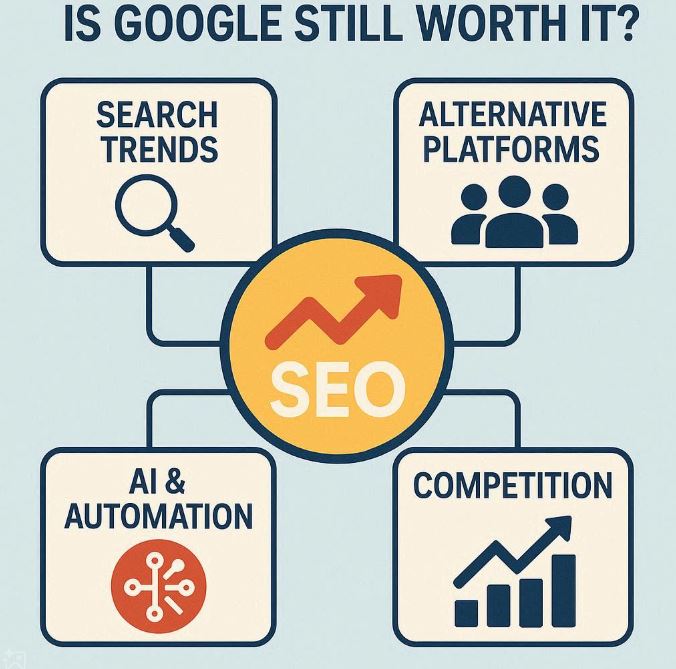
SEO Strategy for 2026: Is Google Still Worth It? How to Dominate Search with Lookkle's Tools
The digital landscape is experiencing its most dramatic transformation in a decade. With ChatGPT commanding 82.7% of the AI chatbot market, social media platforms increasingly functioning as search engines, and Google's AI Overviews appearing in search results and reducing traditional clicks, one question dominates boardroom discussions: Should we still invest in Google SEO for 2026, or pivot entirely to social media and AI platforms?
The answer might surprise you: Google SEO remains not only viable but essential for 2026—but your strategy must evolve dramatically. Here's the data-driven roadmap for winning search visibility in this new era, and how Lookkle's comprehensive analytics tools give you the competitive edge you need.
The Current State of Search: Numbers Don't Lie
Before making strategic decisions, let's examine the actual traffic distribution across channels in 2025:
Organic Search Still Dominates Traffic Organic search accounts for 46.98% of global website traffic, while social media generates 10.12%. Despite widespread concern about Google's decline, search engines still drive nearly five times more traffic than social platforms combined.
AI Traffic is Growing, But Remains Small AI platforms account for just 0.15% of global internet traffic in 2025, though this represents seven times growth since 2024. While the trajectory is impressive, AI search remains a fraction of overall traffic.
The Engagement Factor Here's where it gets interesting: ChatGPT traffic shows a 63.42% engagement rate compared to 61.64% for organic search, meaning AI-referred visitors are slightly more engaged—but they arrive in far smaller volumes.
The Reality Check Organic search accounts for 53% of all website visits, beating paid ads and social media by a wide margin. For businesses seeking qualified traffic at scale, Google remains the undisputed champion.
Why Google SEO Remains Critical for 2026
1. Search Intent Equals Conversion Intent
The fundamental difference between Google and other channels lies in user intent. When someone searches "best project management software for remote teams," they're actively problem-solving. When someone scrolls TikTok and encounters your content, they're passively consuming.
Search visitors are typically 3-5x more likely to convert than social media traffic because they're already looking for solutions. This makes every Google visitor exponentially more valuable than social media impressions.
2. Compounding Returns on Investment
Social media content has a lifespan measured in hours or days. A well-optimized blog post can drive traffic for years. This creates a compounding effect where your SEO investments build upon each other, while social media requires constant content production just to maintain visibility.
Consider the math: A single high-ranking article generating 1,000 monthly visits for three years delivers 36,000 visits from one piece of content. Matching that with social media would require hundreds of posts with no guarantee of sustained reach.
3. AI Platforms Still Rely on Google-Optimized Content
Here's a counterintuitive insight: Optimizing for Google allows brands to show up in ChatGPT and Perplexity as well, as these AI platforms use web content as their information source.
When Perplexity's AI engine sends desktop traffic to over 900 websites, where does that content come from? Primarily from websites that already rank well in traditional search. Strong SEO fundamentals—authority, quality content, proper structure—transfer directly to AI platform visibility.
4. The Omnichannel Reality
The modern customer journey rarely involves a single touchpoint. Around 50.3% of all Google searches include at least one social media platform among the top-10 organic results, demonstrating how these channels interconnect rather than compete.
A typical path might look like:
- User discovers your brand through Instagram
- Searches your company name on Google to verify legitimacy
- Reads blog content ranking in search results
- Asks ChatGPT for comparisons with competitors
- Returns to your site via search to make a purchase
Abandoning Google means breaking this chain at multiple critical points.
The 2026 SEO Playbook: What's Changed and What Works
The rules of SEO have fundamentally evolved. Here's what you need to know:
AI-Generated Content is Everywhere, But Quality Still Wins
AI-written pages now appear in over 17% of top search results, but there's a critical caveat: Google's algorithm is getting smarter about distinguishing AI content from human-generated content, and engaging human content will outrank AI-generated content with no original insights.
The SEO Tools Advantage: Use Lookkle's Website Traffic Checker to identify which competitor content is actually driving traffic over time. You'll often find that AI-generated content mills generate initial traffic spikes but fail to maintain long-term visibility, while thoughtfully crafted human content compounds returns.
E-E-A-T is Now Non-Negotiable
Google's updated quality guidelines favor content that reflects real insights, lived experience, and verifiable authority through the E-E-A-T framework (Experience, Expertise, Authoritativeness, Trustworthiness).
This means:
- Experience: Share real-world case studies, not theoretical advice
- Expertise: Demonstrate subject matter mastery through depth and accuracy
- Authoritativeness: Build brand recognition that AI systems reference
- Trustworthiness: Maintain transparent sourcing and accurate information
Actionable Strategy: Use Lookkle's competitive analysis to identify which competitors are gaining market share in your space. Analyze their content approach, backlink profile, and brand mentions to understand what signals authority in your niche.
Zero-Click Searches Are the New Normal
About 26% of searches that show AI summaries end without any additional clicks, compared to 16% for searches showing only traditional results. This dramatic shift means brand visibility matters even without the click.
The New Metric: Stop measuring success solely by click-through rates. Track:
- AI Overview appearances: Are you cited in Google's AI-generated answers?
- Brand search volume: How many people search your brand name after seeing you in results?
- Domain authority growth: Is your site becoming a more trusted reference source?
Lookkle Tool Application: Use the Organic Traffic Analysis feature to identify which content types drive the most direct traffic versus brand awareness. You may discover that certain pages generate fewer immediate clicks but significantly boost branded searches days later.
Geographic Opportunities Are More Important Than Ever
By 2026, SERP real estate will have shifted significantly with AI overviews, meaning focus must shift beyond reaching 'page 1' toward becoming the definitive trusted source AI engines use.
In saturated markets (like the United States), breaking into top positions becomes exponentially harder. However, emerging markets with growing internet penetration offer easier entry points.
Strategic Application: Lookkle's Traffic Analysis reveals:
- Which countries show growing organic search interest in your sector
- Where competitors are underinvested geographically
- Which international markets have lower competition for your target keywords
This intelligence helps you prioritize market expansion where SEO investments yield maximum returns.
Technical SEO Has Never Mattered More
Best practice across technical SEO elements will become increasingly important in 2026, ensuring that all possible value is accessible and understandable by search engines and LLMs.
This includes:
- Site Speed: Every 100ms delay reduces conversions
- Mobile Optimization: Mobile queries now exceed desktop
- Structured Data: Schema markup helps both traditional search and AI platforms understand your content
- Core Web Vitals: User experience metrics directly impact rankings
Lookkle Insight: The Traffic Data tool reveals how algorithm updates affected your competitors. Filter for dates when Google rolled out Core Web Vitals updates or major algorithm changes to see who won and lost. Then analyze what technical factors differentiated the winners.
The Social Media Reality: Necessary but Not Sufficient
Let's be clear: Social media absolutely deserves a place in your 2026 marketing strategy—but it's not a replacement for SEO.
The Social Media Strengths
48% of 16- to 34-year-olds prefer social networks over search engines for brand research, making social platforms essential for younger audience discovery. Facebook dominates social referral traffic at 76.56% of all social referrals, demonstrating concentrated power in specific platforms.
Social media excels at:
- Brand awareness and discovery: Reaching people who don't know they need your solution
- Community building: Creating loyal audiences through regular engagement
- Visual storytelling: Demonstrating products and services in action
- Viral potential: Single posts can reach millions organically
The Social Media Limitations
However, social media traffic in the EU climbed to a March peak of 15.22% before sliding to 9.01% by August, highlighting the region's volatility in social engagement. This volatility stems from:
Algorithm Dependency: Platform changes can tank your reach overnight. When Meta adjusted the Facebook algorithm in 2023, countless businesses saw organic reach drop 60-80% instantly.
Content Treadmill: Unlike evergreen SEO content, social posts require constant creation. Take a two-week break, and your audience forgets you exist.
Lower Purchase Intent: Social traffic typically has higher bounce rates and lower conversion rates because users aren't actively seeking solutions—they're being interrupted.
Platform Risk: Building your entire presence on rented land means platforms can change rules, deprecate features, or even shut down (RIP Vine, Google+, and dozens of others).
The Optimal Strategy: Integrated, Not Isolated
The most successful 2026 strategies will integrate channels rather than choosing between them:
- Use social media for discovery and awareness: Share your expertise, build community, and drive brand recognition
- Funnel that awareness to owned properties: Your website is the only digital asset you truly control
- Convert traffic with SEO-optimized content: Capture organic searches from people who discovered you socially
- Nurture through email and direct channels: Build direct relationships not dependent on algorithm whims
Lookkle Application: Use Traffic Source Analysis to understand how visitors from different channels behave. You might discover that social traffic has higher bounce rates but those who return via organic search convert at 3x the rate—proving the value of the integrated approach.
The AI Search Reality: Prepare Now, But Don't Pivot Yet
AI search platforms are growing explosively, but context matters.
The Growth Trajectory
ChatGPT's share of total internet traffic doubled between January and April 2025, from 0.0793% to 0.1587%. Perplexity AI processes over 780 million monthly search queries, up dramatically from previous years.
This growth is real and accelerating, but starting from a tiny base.
Why It's Too Early to Abandon Traditional SEO
Volume Disparity: Even with explosive growth, ChatGPT generates 77.97% of all AI traffic, but AI platforms combined still only drive 0.15% of global internet traffic. Shifting resources from Google (48.5% of traffic) to AI platforms (0.15% of traffic) means abandoning 300x more potential visitors.
Monetization Uncertainty: AI platforms haven't figured out business models that reward content creators. When ChatGPT summarizes your article, you get no traffic, no ad revenue, and no conversion opportunity—just a potential brand mention.
Best Practices Overlap: Many tactics that are SEO best practices are also best practices for gaining visibility in LLMs. Strong Google SEO naturally positions you for AI platform visibility.
The Right AI Strategy for 2026
Rather than pivoting away from Google, adopt a "prepare and monitor" approach:
Monitor AI Citations: Track when your brand or content appears in ChatGPT, Claude, Perplexity, and Gemini responses. This helps you understand AI visibility before traffic becomes material.
Optimize for Both: The content that performs well in traditional search—authoritative, well-structured, comprehensive—also performs well in AI summaries.
Experiment with Budget: Allocate 5-10% of your SEO resources to AI optimization experiments, but keep 90% focused on proven channels until the economics shift.
Watch the Data: Use Lookkle's Traffic tools to identify the inflection point when AI traffic becomes material for your industry. Early movers will have advantages, but premature pivots waste resources.
How Tools Power Your 2026 SEO Strategy
Lookkle's comprehensive suite of web analytics tools gives you decisive advantages in this complex landscape:
1. Web Traffic Checker
Strategic Application: Identify exactly when competitors gained or lost traffic, then correlate those changes with algorithm updates, content launches, or seasonal patterns. This reveals what actually works in your niche rather than relying on generic advice.
2026 Relevance: As AI impacts search results unpredictably, historical analysis helps you distinguish temporary fluctuations from permanent shifts, preventing reactive strategy changes.
2. Geographic Traffic Analysis
Strategic Application: Discover which international markets offer the greatest opportunity/competition ratio. While U.S. competition intensifies, markets in Southeast Asia, Latin America, or Eastern Europe might offer easier wins.
2026 Relevance: As developed markets become saturated with AI-generated content, geographic expansion becomes the smart path to growth.
3. Competitive Intelligence
Strategic Application: Monitor 3-5 key competitors continuously. When they gain traffic, analyze why. When they lose traffic, identify opportunities they're missing.
2026 Relevance: In an AI-influenced landscape where rankings shift unpredictably, competitive monitoring helps you adapt faster than rivals.
4. Traffic Source Breakdown
Strategic Application: Understand which channels drive valuable traffic for your business specifically—not industry averages. Your social media might perform exceptionally or poorly relative to organic search.
2026 Relevance: Resource allocation should follow actual performance data, not assumptions about channel effectiveness.
5. Content Performance Tracking
Strategic Application: Identify which content types, lengths, and topics generate sustained traffic versus quick spikes. This guides your content investment strategy.
2026 Relevance: As AI-generated content floods the internet, understanding what creates lasting value (versus disposable content) becomes crucial for ROI.
Your 2026 SEO Action Plan
Based on current data and trends, here's the optimal strategy for most businesses:
Immediate Priorities (Start Now)
1. Audit Your E-E-A-T Signals
- Add author bios with credentials to all content
- Include case studies and real-world examples
- Build external recognition through mentions, awards, and backlinks
- Gather and display customer reviews prominently
2. Improve Technical Foundation
- Run Lookkle's traffic analysis to identify technical issues that cost you rankings
- Achieve Core Web Vitals passing scores
- Implement comprehensive structured data markup
- Ensure mobile experience equals or exceeds desktop
3. Create Genuinely Valuable Content
- Stop thinking about "content for SEO" and start creating resources people genuinely want to save and share
- Focus on depth over breadth—one comprehensive guide beats ten shallow articles
- Include original research, data, or perspectives unavailable elsewhere
4. Build Real Authority
- Guest post on respected industry publications
- Speak at conferences and webinars
- Develop relationships with journalists who cover your space
- Participate meaningfully in professional communities
Medium-Term Strategy (3-6 Months)
1. Geographic Expansion
- Use Lookkle to identify high-opportunity international markets
- Create localized content for those markets (language and cultural adaptation)
- Build local backlinks and brand presence
2. Omnichannel Integration
- Ensure consistent branding across all channels
- Create social content that drives branded searches
- Use email marketing to deepen relationships with existing audiences
- Build remarketing audiences to stay visible across platforms
3. Competitive Positioning
- Identify content gaps where competitors rank but you don't
- Create superior resources for those topics
- Systematically build backlinks to match or exceed competitor authority
Long-Term Vision (6-12 Months)
1. Become the Trusted Source
- Focus on becoming the definitive authority in your niche, not just ranking for keywords
- AI platforms will reference authorities; position your brand as one
- Create content so comprehensive that it becomes the industry standard reference
2. Diversify Intelligently
- Continue monitoring AI platform traffic growth with Lookkle analytics
- Experiment with AI-specific optimization techniques as traffic justifies investment
- Build owned channels (email lists, apps, communities) that don't depend on algorithms
3. Measure What Matters
- Track brand search volume as a leading indicator of awareness
- Monitor AI citations and references even without direct traffic
- Focus on revenue attribution across the entire customer journey, not just last-click
The Verdict: Google, Social, and AI—You Need All Three
The question isn't "Google or social media or AI?" It's "How do I optimally integrate all three?"
The data is unambiguous:
- Google still drives 5x more traffic than social media and 300x more than AI platforms
- Social media excels at awareness and community but struggles with conversion intent
- AI platforms are growing rapidly but remain commercially unproven for content creators
The winning strategy for 2026:
- 70-80% of resources on Google SEO: It remains the highest-ROI channel for qualified traffic at scale
- 15-20% on social media: Essential for discovery, brand building, and reaching younger audiences
- 5-10% on AI optimization: Prepare for the future while the channel matures
This isn't about choosing winners and losers—it's about intelligent resource allocation based on actual performance data rather than hype cycles.
Get Started with Lookkle Today
The complexity of modern SEO requires sophisticated analytics to make intelligent decisions. Lookkle's Web Traffic Checker and comprehensive analytics suite provide the competitive intelligence you need to win in 2026's multi-platform landscape.
What Lookkle Enables:
- Identify exactly when and why competitors gain or lose traffic
- Discover geographic markets with optimal opportunity/competition ratios
- Track your visibility across search, social, and emerging AI platforms
- Make data-driven decisions about where to invest limited resources
The businesses that dominate search in 2026 won't be the ones with the biggest budgets—they'll be the ones with the best intelligence. And intelligence starts with understanding what's actually working in your market right now, not generic predictions about the future.
Ready to build your 2026 search strategy on solid data rather than speculation? Start with Lookkle's Web Traffic Checker to understand your current position, identify opportunities your competitors are missing, and track your progress as you execute the integrated, data-driven approach that wins in this new era of search.
The future of search is multi-platform, AI-influenced, and intensely competitive. But Google remains the center of gravity—and the brands that recognize this while intelligently preparing for emerging channels will capture the lion's share of qualified traffic.
Your move.