Reading Time 17
Number of Words 3625
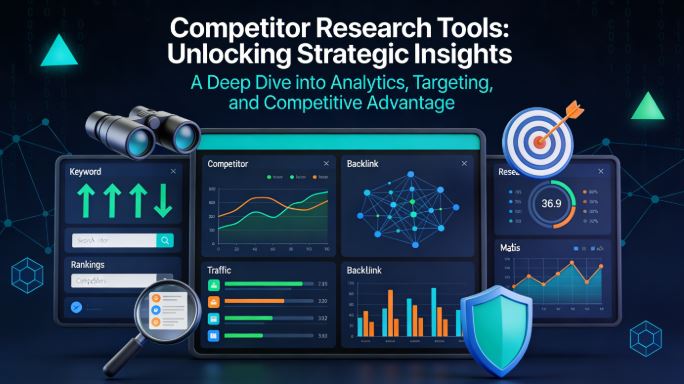
Competitor research has evolved from manual Google searches and spreadsheet tracking to sophisticated AI-powered platforms that monitor every aspect of your rivals' digital strategy in real-time.
In 2026, the competitive intelligence landscape is dominated by tools that combine SEO analysis, social listening, website monitoring, and predictive analytics into unified dashboards.
Whether you're a solo entrepreneur tracking local competitors or an enterprise team monitoring global market leaders, choosing the right competitor research tools can mean the difference between reactive scrambling and proactive strategy. This comprehensive guide analyzes the top 25+ competitor research tools available in 2026, comparing features, pricing, and ideal use cases to help you build the perfect competitive intelligence stack.
Why Competitor Research Tools Matter in 2026
The digital marketing landscape has become exponentially more complex. With AI-generated content flooding search results, zero-click searches dominating SERPs, and advertising costs rising across all platforms, understanding what your competitors are doing—and why it's working—has never been more critical.
The State of Competitive Intelligence in 2026
88% of marketing professionals now use dedicated competitor analysis tools, up from 64% just two years ago. The shift is driven by several factors:
-
AI Search Visibility: Google AI Overviews and ChatGPT now answer 15%+ of searches without clicks, making traditional rank tracking insufficient
-
Content Saturation: The average niche has 3-5x more published content than in 2023, requiring deeper analysis to find gaps
-
Attribution Complexity: Multi-touch customer journeys across 8+ touchpoints demand understanding the full competitor funnel
-
Speed of Change: Website updates, pricing changes, and product launches happen weekly—manual monitoring can't keep pace
What Modern Competitor Research Tools Track
Contemporary competitive intelligence platforms monitor far more than just keywords and backlinks:
SEO & Organic Search:
-
Keyword rankings and visibility scores
-
Backlink profiles and referring domains
-
Content gaps and topic clusters
-
Technical SEO health and Core Web Vitals
-
AI Overview presence and featured snippet ownership
Paid Advertising:
-
Active ad campaigns across Google, Facebook, LinkedIn, TikTok
-
Ad creative history and messaging evolution
-
Estimated ad spend and budget allocation
-
Landing page strategies and conversion funnels
Website Intelligence:
-
Real-time change detection (pricing, features, messaging)
-
Technology stack (CMS, analytics, marketing tools)
-
Page performance and user experience metrics
-
Product catalog updates and inventory tracking
Social Media & Brand Mentions:
-
Social media engagement rates and content performance
-
Sentiment analysis across platforms
-
Influencer partnerships and brand collaborations
-
Customer reviews and public feedback
Business Intelligence:
-
Funding rounds and investor relationships
-
Hiring patterns and team expansion signals
-
Product launches and partnership announcements
-
Market positioning and messaging shifts
Top 17 Competitor Research Tools: Comprehensive Comparison
SEO & Keyword Research Tools
1. Semrush: Best All-in-One Competitor Analysis Platform ⭐
Best For: Agencies and mid-to-large businesses needing comprehensive SEO, PPC, and content intelligence.
Key Features:
-
Domain Overview: Rapid competitive website analysis with authority score, organic/paid traffic estimates, and backlink profiles
-
Keyword Gap Analysis: Identifies keywords competitors rank for that you don't (over 26 billion keyword database)
-
Traffic Analytics: Estimates competitor traffic sources, volume, and audience demographics
-
Backlink Gap: Reveals referring domains linking to competitors but not to you
-
Advertising Research: Complete PPC competitor intelligence with ad copy history
-
Market Explorer: Visualize your competitive landscape and market positioning
-
Semrush One Dashboard: Unified tracking of both traditional SEO and AI visibility (ChatGPT, Perplexity, Gemini citations)
Pricing: From $117.33/month (Pro) to $449.95/month (Business)
Pros:
-
Most comprehensive feature set—replaces multiple tools
-
Excellent for agencies managing multiple clients
-
Strong historical data for trend analysis
-
Combines SEO, PPC, social, and content in one platform
Cons:
-
Steep learning curve for beginners
-
Higher price point than specialized tools
-
Not quite as strong as Ahrefs specifically for backlink analysis
2. Ahrefs: Best for Backlink Analysis & Keyword Gaps
Best For: SEO professionals prioritizing link building and organic search competitive analysis.
Key Features:
-
Site Explorer: Comprehensive competitor domain analysis with top-performing pages and traffic sources
-
Content Explorer: Discover competitor content earning the most backlinks and social shares
-
Keyword Explorer: Find high-value keywords competitors rank for with difficulty assessments
-
Backlink Checker: Industry-leading backlink database (over 35 trillion links)
-
Rank Tracker: Monitor keyword rankings over time for clients and competitors
-
Content Gap Tool: Identify keywords multiple competitors rank for that you're missing
Pricing: From $129/month
Pros:
-
Best-in-class backlink analysis
-
Clean, intuitive interface
-
Excellent keyword gap identification
-
Strong content discovery features
Cons:
-
Limited PPC intelligence compared to Semrush
-
Fewer social media and brand monitoring features
-
No market research or competitor market share data
3. Lookkle: Best Free Competitor Analysis & Traffic Intelligence Platform ⭐
Best For: Small businesses, content creators, and marketers seeking comprehensive competitor insights without expensive subscriptions.
Key Features:
-
Website Competitor Analysis: Analyze and compare up to 20 competing websites simultaneously with detailed traffic metrics, engagement rates, and behavioral insights
-
Traffic Source Breakdown: Discover where competitor traffic originates (organic search, social media, direct, referral) to identify high-performing channels
-
Website Traffic Checker: Instantly check monthly traffic volume, traffic evolution over time, visitor demographics, and device/platform distribution for any public website
-
Engagement Metrics: Track competitor bounce rates, time on site, pages per session, and returning user percentages to benchmark your performance
-
Audience Demographics: Analyze competitor visitor geography (top 5 countries), device usage (desktop/mobile/tablet), and user behavior patterns
-
Visual Website Preview: View thumbnails of competitor sites with creation date metadata to understand their digital footprint
-
Keyword & Backlink Discovery: Identify organic keywords driving competitor traffic and discover their backlink sources for SEO strategy optimization
-
Historical Tracking: Run multiple analyses over time to monitor competitor performance trends and market shifts
Pricing: Free with basic analysis; Full access for $19.95 (one-time unlock for saved reports and extended data)
Pros:
-
Extremely affordable — Full competitor intelligence for less than the cost of a coffee
-
No registration required for basic analysis — Start researching immediately without account creation barriers
-
Analyzes any public website — No need for Google Analytics access or internal dashboard permissions
-
Up to 20 competitors at once — Broader competitive landscape view than most free tools
-
Actionable insights — Clear, visual data presentation designed for immediate strategic decisions
-
Safe and secure — External analysis only, no installation or private data access required
-
Multi-industry application — Suitable for ecommerce, tech, blogging, professional services, and any online business
Cons:
-
Estimates vs. exact data — Uses AI algorithms and public sources rather than internal analytics (similar to SimilarWeb, Ahrefs estimates)
-
Limited data for low-traffic sites — Sites with minimal traffic show general trends rather than granular details
-
No PPC ad intelligence — Focuses on organic traffic and engagement rather than paid advertising analysis
Ideal Use Cases:
-
Competitor Benchmarking: Quickly assess if competitors are outperforming you in traffic, engagement, or user retention before deciding on strategy changes
-
SEO Strategy Development: Identify which traffic channels (organic, social, referral) drive the most visitors to competitor sites, then prioritize those channels in your own strategy
-
Content Gap Analysis: Discover which competitor pages receive the most traffic and reverse-engineer their keyword targeting using Lookkle's complementary keyword research tool
-
Market Research: Before entering a niche, analyze 10-20 competitors simultaneously to understand traffic patterns, seasonality, and market opportunity
-
Client Reporting: Agencies can generate competitive intelligence reports for clients without expensive tool subscriptions
-
Social Media Optimization: See which competitors get significant social traffic, research their platforms and content types, then adapt successful tactics
-
Link Building Prospecting: Identify competitors receiving strong referral traffic, then target those same linking domains for your backlink outreach
4. SpyFu — Best for Historical Competitor Data & PPC Intelligence
Best For: Marketers tracking long-term competitor evolution and paid search strategies.
Key Features:
-
Historical Keyword Tracking: See every organic and paid keyword a competitor has ranked for (going back 15+ years)
-
Ad History: Complete archive of competitor ad copy and campaign evolution
-
Kombat Tool: Visualize keyword overlap between multiple domains
-
Backlink Outreach: Identify domains linking to competitors for prospecting
-
SpyGPT AI: Content gap identification and automated recommendations
-
Rank Tracking: Monitor both SEO and PPC keyword performance
Pricing: From $39/month (Basic)
Pros:
-
Unmatched historical data depth
-
Affordable compared to Semrush/Ahrefs
-
Strong PPC competitive intelligence
-
Great for discovering competitor testing patterns
Cons:
-
Interface feels dated compared to modern tools
-
Limited international data (US-focused)
-
Weaker content marketing and social features
5. Moz Pro — Best Chrome Extension for Competitive Analysis
Best For: Quick competitor insights directly in search results and on-the-go analysis.
Key Features:
-
MozBar Chrome Extension: Instant domain authority, page authority, and spam score for any site
-
Keyword Explorer: Discover competitor keywords with SERP feature tracking
-
Link Explorer: Backlink analysis with spam score filtering
-
Rank Tracker: Daily keyword rank monitoring with SERP feature tracking
-
On-Page Grader: Compare your page optimization to ranking competitors
Pricing: From $99/month
Pros:
-
Excellent Chrome extension for real-time insights
-
User-friendly interface, great for beginners
-
Strong local SEO features
-
Good community and educational resources
Cons:
-
Smaller keyword database than Semrush/Ahrefs
-
Limited PPC and social media analysis
-
Domain Authority metric not as accurate as Ahrefs DR
6. SE Ranking — Best Affordable SEO Competitor Analysis
Best For: Small businesses and startups needing core SEO competitive intelligence on a budget.
Key Features:
-
Competitive Research: Analyze competitor domain metrics and keyword portfolios
-
Keyword Rank Tracking: Monitor rankings across multiple search engines and locations
-
Backlink Checker: Analyze competitor link profiles with toxic link detection
-
Website Audit: Technical SEO comparison with competitors
-
Marketing Plan: Budget tracking and ROI analysis
Pricing: From $49/month
Pros:
-
Most affordable full-featured SEO suite
-
White-label reports for agencies
-
Good international search engine support
-
Flexible pricing based on usage
Cons:
-
Smaller data sets than premium tools
-
Less sophisticated AI and automation
-
Limited social media and brand monitoring
7. LowFruits — Best for Budget-Friendly Keyword Gap Research
Best For: Solo creators and small sites finding low-competition keyword opportunities.
Key Features:
-
Low-Competition Keyword Finder: Identifies "weak spots" in SERPs where smaller sites can rank
-
SERP Analysis: Detailed breakdown of ranking difficulty based on domain authority
-
Keyword Clustering: Groups related keywords for content planning
-
Competitor Keyword Extraction: Pull keyword lists from competitor domains
Pricing: From $25 (one-time credits) or $249/year
Pros:
-
Extremely affordable
-
Focuses on actionable, winnable keywords
-
No monthly subscription required
-
Great for niche sites and content creators
Cons:
-
Limited to keyword research (no backlinks, ads, etc.)
-
Smaller database than enterprise tools
-
Basic interface and reporting
Website Traffic & Market Intelligence
8. Similarweb — Best for Traffic Analysis & Market Benchmarking
Best For: Understanding competitor traffic sources, audience demographics, and market positioning.
Key Features:
-
Website Traffic Insights: Estimated monthly visits, traffic sources (direct, referral, search, social, paid)
-
Audience Analysis: Demographics, interests, and geographic distribution
-
Market Intelligence: Industry benchmarking and competitive landscape mapping
-
Conversion Funnel: Track visitor journey across competitor sites
-
Mobile App Analytics: Competitor app downloads and engagement
-
Keyword Research: Discover competitor organic and paid keywords
Pricing: Free plan available; Pro from $125/month; Enterprise custom
Pros:
-
Best-in-class traffic estimation accuracy
-
Comprehensive market research capabilities
-
Strong mobile and app intelligence
-
Excellent for strategic market positioning
Cons:
-
Expensive for full feature access
-
Less actionable for day-to-day SEO than Semrush
-
Data accuracy varies by site size
9. Visualping — Best for Real-Time Website Change Monitoring
Best For: Tracking competitor pricing changes, feature updates, and website modifications.
Key Features:
-
Automated Website Monitoring: Track specific pages or entire websites for changes
-
Visual Change Detection: Screenshots and side-by-side comparisons of changes
-
Real-Time Alerts: Email, Slack, or API notifications when changes occur
-
Competitor Price Tracking: Monitor pricing pages automatically
-
Product Launch Detection: Get notified when new products or features appear
-
Historical Archive: Review all past changes with timestamped screenshots
Pricing: Free plan (65 checks/month); Pro from $10/month; Solutions from $500/month
Pros:
-
Simple, focused tool for specific need
-
Very affordable for startups
-
Real-time notifications prevent surprises
-
Visual evidence for competitive analysis presentations
Cons:
-
Doesn't provide SEO or traffic data
-
Requires knowing which pages to monitor
-
Can generate alert fatigue if too many pages tracked
Social Media & Brand Monitoring
10. Sprout Social — Best for Social Media Competitive Analysis
Best For: Social media managers tracking competitor content performance and engagement.
Key Features:
-
Competitor Social Profiles: Track posting frequency, engagement rates, and content types
-
Sentiment Analysis: Monitor brand mentions and customer sentiment
-
Content Performance: See which competitor posts drive the most engagement
-
Hashtag Tracking: Identify trending hashtags competitors use
-
Influencer Discovery: Find influencers engaging with competitor brands
-
Social Listening: Monitor brand mentions across platforms
Pricing: From $249/seat/month
Pros:
-
Most comprehensive social media analytics
-
Excellent sentiment analysis
-
Strong influencer identification
-
Unified inbox for team collaboration
Cons:
-
Expensive for small teams
-
Primarily social-focused (limited SEO features)
-
Steep learning curve
11. Brand24 — Best for Brand Mention Tracking
Best For: Monitoring online conversations about your brand and competitors.
Key Features:
-
Real-Time Brand Mentions: Track mentions across social media, news, blogs, forums, podcasts
-
Sentiment Analysis: Automatically categorize mentions as positive, negative, or neutral
-
Competitor Benchmarking: Compare your brand's online presence to competitors
-
Influencer Identification: Find users with high reach mentioning your competitors
-
Discussion Volume Charts: Visualize mention trends over time
-
AI Insights: Automated summaries of brand perception
Pricing: 14-day free trial; from $149/month
Pros:
-
Comprehensive mention tracking
-
Good sentiment analysis
-
Affordable compared to enterprise tools
-
Easy to set up and use
Cons:
-
Limited SEO and traffic data
-
Best for brand monitoring, less for technical competitive analysis
-
Some false positives in mention tracking
12. BuzzSumo — Best for Content Performance Analysis
Best For: Content marketers analyzing which competitor content earns backlinks and social shares.
Key Features:
-
Content Discovery: Find top-performing content by topic, domain, or keyword
-
Engagement Metrics: See social shares, backlinks, and evergreen score for any content
-
Competitor Content Analysis: Track what content competitors publish and how it performs
-
Influencer Discovery: Find content creators and influencers in your niche
-
Content Alerts: Get notified when competitors publish new content
-
Question Analyzer: Discover questions people ask about topics (great for content ideas)
Pricing: From $199/month
Pros:
-
Best tool specifically for content strategy
-
Excellent influencer database
-
Great for discovering viral content patterns
-
Strong journalist and media contact database
Cons:
-
Expensive for content-only features
-
Limited technical SEO capabilities
-
Social share data less meaningful in 2026 than 2018
Technology & Business Intelligence
13. BuiltWith — Best for Tech Stack Research
Best For: Understanding what technologies competitors use to run their websites.
Key Features:
-
Technology Profiling: Identify CMS, ecommerce platform, analytics, marketing automation tools
-
Ad Network Detection: See what advertising platforms competitors use
-
Trends Reports: Track technology adoption across your industry
-
Lead Generation: Find websites using specific technologies
-
Competitor Technology Tracking: Monitor when competitors adopt new tools
Pricing: Free for basic lookups; Pro from $295/month
Pros:
-
Comprehensive technology database
-
Instant insights with free plan
-
Useful for sales teams selling software
-
Historical technology tracking
Cons:
-
Narrow focus (only technology stack)
-
Doesn't explain why competitors chose specific tools
-
No traffic or SEO data
14. Crunchbase — Best for Funding & Business Intelligence
Best For: Understanding competitor funding, investors, and corporate structure.
Key Features:
-
Funding Tracking: Complete history of funding rounds, amounts, and investors
-
Leadership Data: Track C-suite changes and board members
-
Acquisition Tracking: Monitor M&A activity in your industry
-
Company Profiles: Employee count, headquarters, founding date, industry classification
-
Investment Trends: Identify hot sectors and emerging competitors
Pricing: Free basic access; Pro from $29/month
Pros:
-
Best source for private company financial data
-
Critical for understanding competitive positioning
-
Great for identifying emerging competitors early
-
Useful for investor relations and fundraising
Cons:
-
No marketing or SEO data
-
Limited value for small local competitors
-
Data gaps for non-venture-backed companies
15. Owler — Best for Real-Time Competitive Updates
Best For: Receiving daily competitive intelligence briefings and company news.
Key Features:
-
Company News Alerts: Real-time notifications of competitor news, funding, acquisitions
-
Revenue Estimates: Crowdsourced and estimated revenue data
-
Employee Counts: Track team expansion patterns
-
Competitive Landscape Mapping: Visualize your market position
-
Follow Unlimited Competitors: No limits on free plan
Pricing: Free plan available; Pro from $99/month
Pros:
-
Excellent free plan
-
Real-time alerts keep you informed
-
Crowdsourced data adds unique insights
-
Good for sales teams tracking prospects
Cons:
-
Data accuracy varies (crowdsourced)
-
No SEO or marketing analytics
-
Better for business intelligence than marketing
AI-Powered Competitive Intelligence
16. Signum.AI — Best AI Competitor Tracking & Monitoring
Best For: Teams needing automated competitive intelligence across multiple data sources.
Key Features:
-
Automated Competitor Monitoring: Tracks website changes, content releases, product updates
-
Hiring Pattern Detection: Alerts when competitors post new jobs or hire key roles
-
Executive Social Monitoring: Tracks what key decision-makers say publicly
-
Product Launch Detection: Notifications when new products or features are announced
-
Ad Campaign Tracking: Monitors Facebook and Google Ads via transparency tools
-
Customer Review Monitoring: Tracks competitor reputation across review platforms
-
Monthly Competitor Reports: Curated insights including ad spend changes and SEO movements
Pricing: Custom enterprise pricing
Pros:
-
Comprehensive all-in-one AI solution
-
Reduces manual monitoring workload significantly
-
Real-time alerts prevent being caught off-guard
-
Monthly reports perfect for executive briefings
Cons:
-
Enterprise-only (no self-service plans)
-
Pricing not transparent
-
May be overkill for small businesses
17. Kompyte — Best for Competitive Sales Enablement
Best For: Sales and product teams needing battle cards and competitive positioning.
Key Features:
-
Automated Competitive Intelligence: Tracks competitor website, content, and product changes
-
Battle Card Generation: Auto-generated competitive positioning documents
-
Win/Loss Analysis: Track why deals are won or lost against specific competitors
-
Sales Alert Integration: Push competitive updates to sales teams via Slack, CRM
-
Product Launch Tracking: Monitor feature releases and pricing changes
Pricing: Custom enterprise pricing
Pros:
-
Built specifically for sales enablement
-
Strong integration with CRM systems
-
Automated battle card updates save time
Cons:
-
Expensive enterprise tool
-
Less useful for pure marketing teams
-
Requires consistent internal data input
18. Crayon — Best for Real-Time Competitive Intelligence
Best For: Marketing and product teams monitoring competitor digital footprints.
Key Features:
-
Website Change Tracking: Monitors competitor websites for pricing, messaging, and feature changes
-
Email Campaign Monitoring: Tracks competitor email marketing
-
Social Media Tracking: Follows competitor social posts and engagement
-
Competitive Insights Feed: Aggregated view of all competitor activities
-
Customizable Alerts: Email notifications for specific competitive events
Pricing: Custom enterprise pricing
Pros:
-
Comprehensive monitoring across channels
-
Good for fast-moving industries
-
Reduces time spent on manual competitor checks
Cons:
-
No self-service pricing
-
May generate too many alerts
-
Less SEO-focused than specialized tools
Free Competitor Research Tools
19. Google Alerts — Simplest Free Monitoring
Best For: Basic brand mention tracking and competitor news monitoring.
Setup: Create alerts for competitor brand names, executive names, or industry keywords. Receive email digests when new content is published.
Pros: Completely free, zero setup time
Cons: Limited to text-based content, misses website changes and social media
20. Ubersuggest (Neil Patel) — Free SEO Starter Tool
Best For: Beginners and small businesses needing basic competitor keyword research.
Features: Domain overview, top competitor keywords, backlink data, site audit, content ideas
Pricing: Free with limited searches; $29/month for unlimited
Pros: Very user-friendly, generous free tier
Cons: Smaller database than Semrush/Ahrefs, limited advanced features
21. Google Search Console — Free Competitive Benchmarking
Best For: Understanding your own performance relative to competitors (indirect competitive analysis).
Features: See queries where you appear alongside competitors, click-through rates, average position
Pros: Free, official Google data
Cons: Only shows your own data (must infer competitive insights)
How to Build Your Competitive Intelligence Stack
Most successful teams don't rely on a single tool—they combine 2-4 specialized platforms based on their specific needs and budget.
Recommended Tool Combinations by Company Size
Solopreneurs / Small Sites (Budget: $0-$100/month):
-
Primary: Ubersuggest, LowFruits, Lookkle (keyword research / traffic intelligence)
-
Secondary: Google Alerts (news monitoring)
-
Add-on: BuiltWith free (tech stack research)
-
Free: Google Search Console (own performance tracking)
Small Businesses (Budget: $100-$300/month):
-
Primary: SE Ranking or SpyFu (core SEO/PPC)
-
Secondary: BuzzSumo Content Analyzer (content strategy)
-
Add-on: Visualping (pricing monitoring)
Mid-Market Companies (Budget: $300-$1,000/month):
-
Primary: Semrush or Ahrefs (comprehensive SEO)
-
Secondary: Similarweb (traffic intelligence)
-
Tertiary: Brand24 or Sprout Social (brand/social monitoring)
-
Add-on: BuiltWith Pro (tech research)
Enterprise Organizations (Budget: $1,000+/month):
-
Full Stack: Semrush Business + Similarweb Enterprise + Sprout Social + Signum.AI + Klue (sales enablement)
-
Specialized: Crayon or Kompyte for automated intelligence
E-commerce Businesses:
-
Primary: Semrush (SEO + ads)
-
Critical: Visualping (price monitoring)
-
Secondary: Similarweb (traffic sources)
-
Tertiary: SpyFu (PPC intelligence)
Competitor Research Best Practices in 2026
1. Monitor the Right Competitors
Don't just track industry giants—they're not your real competition. Focus on:
-
SERP Competitors: Sites actually ranking for your target keywords (may not be direct business competitors)
-
Traffic Competitors: Sites attracting your target audience (use Similarweb or Lookkle to identify)
-
Emerging Competitors: New sites gaining traction (Crunchbase for funding, Ahrefs or Lookkle for traffic growth)
Recommended: Track 5-10 competitors across different tiers (1-2 leaders, 3-4 direct competitors, 2-3 emerging threats).
2. Focus on Actionable Insights, Not Vanity Metrics
Bad competitive analysis: "Competitor X has 50,000 backlinks"
Good competitive analysis: "Competitor X gained 200 backlinks from industry directories we're not listed in—let's target those specific directories"
Prioritize:
-
Keyword gaps you can realistically rank for (not just high-volume keywords)
-
Content formats working for competitors (listicles, videos, interactive tools)
-
Backlink sources you can replicate (guest post opportunities, partnerships)
-
SERP features competitors own (featured snippets, People Also Ask)
3. Combine Quantitative and Qualitative Analysis
Tools provide data, but context requires human analysis:
-
Quantitative (Tools): Traffic estimates, keyword rankings, backlink counts, engagement metrics
-
Qualitative (Manual): User experience, content quality, brand positioning, customer sentiment
Workflow:
-
Use tools to identify what competitors are doing (keywords, content, links)
-
Manually review how well they're executing (content depth, UX, expertise)
-
Find gaps where competitors have traffic but poor execution (your opportunity)
4. Track Changes Over Time, Not Just Snapshots
Single snapshots miss the story. Set up:
-
Monthly competitor reports tracking key metrics (traffic, top keywords, backlink growth)
-
Alerts for significant changes (new product launches, pricing shifts, major content campaigns)
-
Quarterly strategy reviews analyzing competitor trends and your response
Tools for this: Visualping (website changes), Google Alerts (news), Signum.AI (comprehensive monitoring).
5. Analyze Competitor Failures, Not Just Successes
What didn't work teaches as much as what did:
-
Content that got no traction (avoid those topics/formats)
-
Backlink sources with low referral traffic (deprioritize those for outreach)
-
Product launches that failed (learn from their mistakes)
-
Ad campaigns with low engagement (identified via SpyFu/Semrush ad history)
Use tools like BuzzSumo to see competitor content with low engagement—these are topics or angles to avoid.
6. Respect Competitor Strengths, Exploit Weaknesses
Don't compete head-on where competitors are strongest (unless you have superior resources).
Smart approach:
-
Identify strong competitors' weaknesses (e.g., outdated content, poor mobile experience, thin product documentation)
-
Target keyword gaps where no strong competitor ranks
-
Create superior content formats (if competitors only have text, create video/interactive)
-
Focus on underserved audience segments (if competitors target enterprise, go after SMBs)
7. Automate Repetitive Monitoring, Focus Humans on Strategy
What to automate:
-
Daily rank tracking (SE Ranking, Semrush Position Tracking)
-
Website change monitoring (Visualping, Signum.AI)
-
Brand mention alerts (Google Alerts, Brand24)
-
Social media monitoring (Sprout Social, Buffer)
What requires human analysis:
-
Strategic implications of competitor moves
-
Content quality and user experience assessment
-
Identifying patterns and trends across multiple data sources
-
Deciding which competitive insights to act on
Common Competitor Research Mistakes to Avoid
❌ Mistake #1: Copying Competitors Without Understanding Why It Works
The Problem: Replicating competitor tactics without context often fails. What worked for a high-authority competitor may not work for a smaller site.
Solution: Use tools to identify what competitors do, then analyze why it works (audience fit, domain authority, timing, execution quality) before deciding if it's right for you.
❌ Mistake #2: Tracking Too Many Competitors
The Problem: Monitoring 20+ competitors dilutes focus and creates analysis paralysis.
Solution: Focus on 5-10 most relevant competitors. Use tiers: 1-2 aspirational (industry leaders), 3-4 direct (similar size/audience), 2-3 emerging (potential threats).
❌ Mistake #3: Ignoring Smaller, Niche Competitors
The Problem: Focusing only on big brands misses agile smaller competitors capturing long-tail keywords and niche audiences.
Solution: Use Ahrefs "Competing Domains" or Semrush "Competitive Positioning Map" to discover SERP competitors you didn't know existed.
❌ Mistake #4: One-Time Analysis Instead of Ongoing Monitoring
The Problem: Competitive landscape changes constantly—one-time research becomes outdated quickly.
Solution: Set up automated monitoring (alerts, reports) and schedule monthly/quarterly deep-dive reviews.
❌ Mistake #5: Not Acting on Insights
The Problem: Collecting competitive data without translating it into action wastes time and resources.
Solution: For every competitor insight, ask "So what?" and "Now what?" Document action items and assign ownership. Create a competitive response framework.
The Future of Competitor Research Tools: AI and Automation
Trend #1: Predictive Competitive Intelligence
Current State (2026): Tools like Signum.AI already predict competitor moves based on hiring patterns, funding rounds, and content trends.
Near Future (2027-2028): AI will forecast:
-
Likely product launches based on job postings and R&D investments
-
Content strategy shifts based on keyword testing patterns
-
Market expansion based on localized domain registrations and hiring
Trend #2: AI Search Visibility Tracking
Why It Matters: With ChatGPT answering 200M+ queries daily and Google AI Overviews appearing in 15%+ of searches, traditional rank tracking is insufficient.
Tools Adapting: Semrush One now tracks citations in ChatGPT, Perplexity, Gemini, and other AI systems. Expect all major SEO tools to add "AI visibility scores" by late 2026.
Trend #3: Automated Competitive Response Workflows
Current: Tools send alerts; humans decide actions.
Emerging: AI will suggest specific responses to competitive moves:
-
"Competitor launched feature X → Recommended: Update comparison page + create FAQ"
-
"Competitor ranks for keyword Y → Recommended: Expand existing article Z with sections A, B, C"
-
"Competitor reduced pricing 15% → Recommended: Launch limited-time promotion to retain customers"
Trend #4: Integration of First-Party Data with Competitive Intelligence
Current: Competitor tools analyze external data; your analytics are separate.
Future: Platforms will integrate:
-
Your Google Analytics with Similarweb's competitive traffic data
-
Your CRM win/loss data with Klue's competitive intelligence
-
Your customer feedback with competitor review sentiment analysis
Result: Contextualized insights like "You're losing deals to Competitor X primarily in the Enterprise segment when price is the main objection".
Comparing the main Tools
| Feature | Lookkle | Semrush | Similarweb | Ahrefs |
|---|---|---|---|---|
| Monthly Cost | $19.95 | $117.33+ | $125+ | $129+ |
| Traffic Estimation | ✅ Yes | ✅ Yes | ✅ Yes (best) | ✅ Yes |
| Competitor Count | 20 simultaneous | 5-10 | 5-10 | 5 |
| Keyword Data | Via separate tool | ✅ Comprehensive | ✅ Yes | ✅ Best |
| Backlink Analysis | ⚠️ Limited | ✅ Advanced | ⚠️ Limited | ✅ Best |
| PPC Intelligence | ❌ No | ✅ Yes | ⚠️ Limited | ⚠️ Limited |
| Learning Curve | ⭐ Very Easy | ⭐⭐⭐ Moderate | ⭐⭐⭐ Moderate | ⭐⭐⭐ Moderate |
Try Lookkle's free competitor research tools today